


Some yards have a problem a wood fence only half solves: a main road right behind the back fence. Traffic noise, headlights and the feeling of being on show don't stop at a row of pickets.
Precast concrete is the fence for that. It's on Regal Fencing's service list in the company's own words: "tall, quiet and permanent walls along busy roads, with almost no upkeep."
It's also the biggest fence decision you can make. A concrete wall generally costs more than cedar, takes more planning and stays where you put it. This page sets out the trade-offs before Jackson Vann, our owner and estimator, comes out to measure.
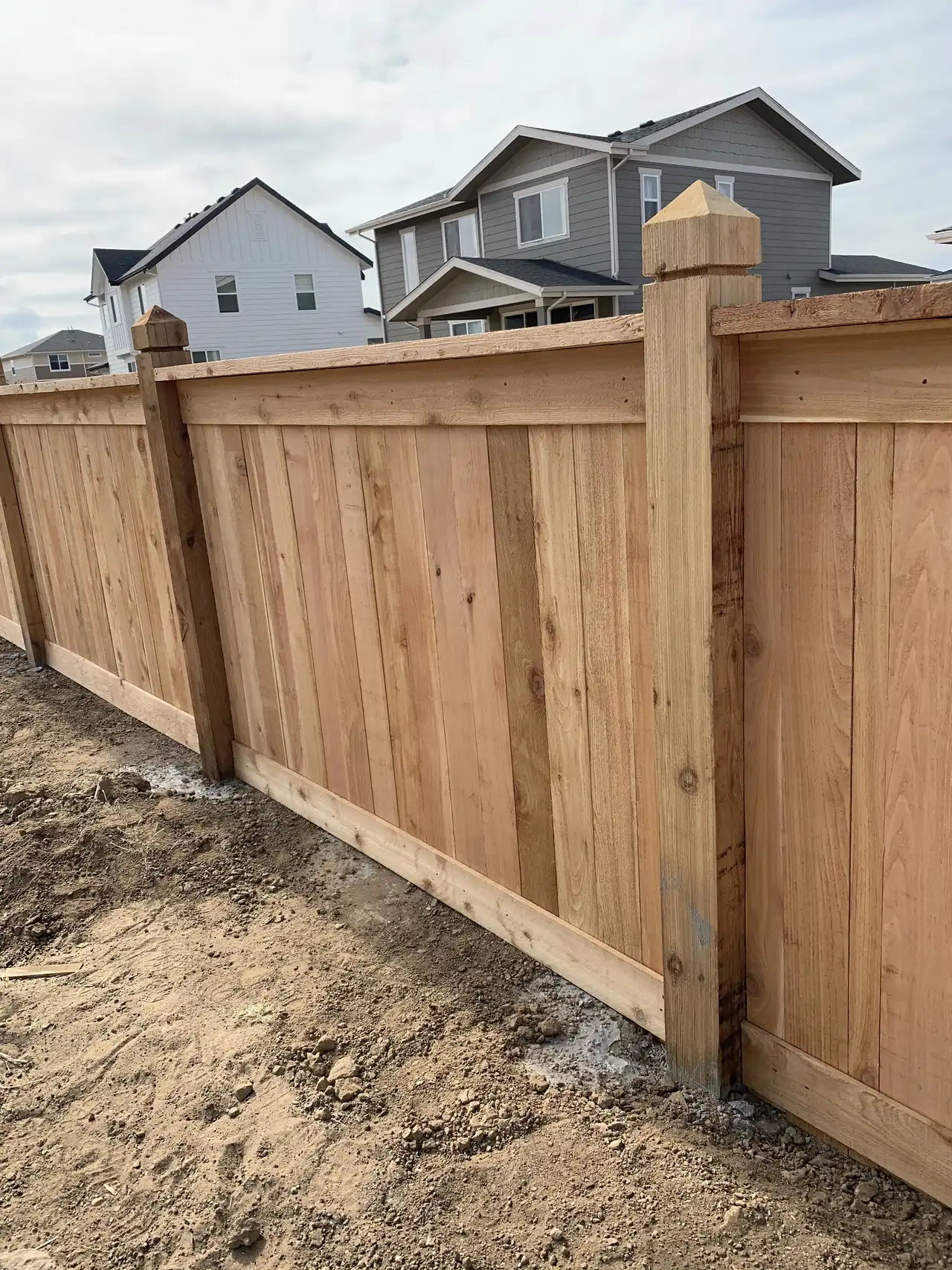
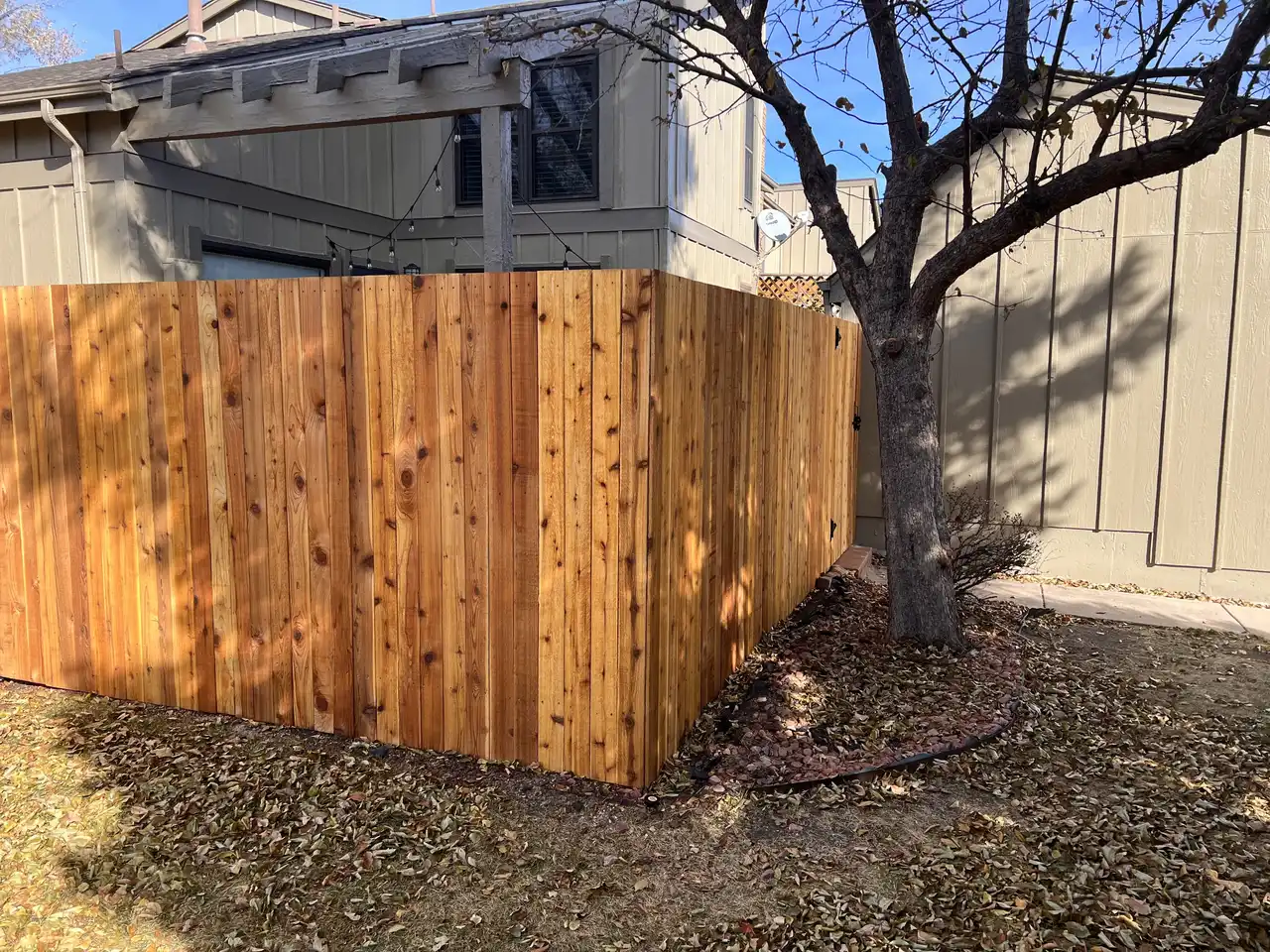
What comes with precast concrete fences?
A site visit that checks access first
Concrete panels and posts are heavy and arrive by truck. Jackson looks at how they'd reach your fence line before he prices anything. He also measures the line and looks at the grade and where water runs.
Walls for homes on busy roads
This is the job precast is on our list for. A solid concrete wall along the back of a lot puts weight and height between your patio and the traffic.
Rule checks before you commit
A tall solid wall gets a close look from cities and HOAs. We tell you your city's height limit and permit rule, and we help you prepare what your HOA asks for.
811 locates and the sprinkler line guarantee
We request the Colorado 811 locate before digging, so buried utilities are marked. If our crew damages a sprinkler line during the install, we fix it for free.
Other options priced alongside
Precast isn't the only way to quiet a yard. Composite fencing cuts down street noise too, and cedar privacy fencing is our specialty. Jackson can price all three at one visit.
How does a fence install run?
Estimate on site
Jackson walks the line, measures it and checks access for a truck and equipment. The estimate is free, and it comes as a written price.
Height, finish and rules
Choose the height and the panel finish. We check both against your city's limits and your HOA's guidelines before anything is ordered.
Approvals and 811
Permits and HOA review come first where they apply. Then we file the 811 locate, 3 business days before digging. The law's minimum is 2.
Posts and panels set
The crew sets the posts and places the panels between them. Most of our fences take 1 to 2 days. A concrete wall is a bigger job, and Jackson gives you its schedule with the price.
Final check
Every install is inspected before we leave. We walk the wall with you from end to end and clean up the site.
What is a precast concrete fence?
It's a fence built from concrete parts that are made before they reach your yard. Panels and posts are cast in molds at a plant, cured, and delivered ready to set.
That's the difference from a block wall or a poured wall, which are built or formed in place. With precast, the work on site is setting posts and placing panels.
The face doesn't have to look like plain concrete. Precast panels are made with textures molded in, such as stone, brick or wood grain patterns. Ask Jackson which textures and colors come with the product he quotes.
You'll also hear it called a concrete fence, a precast wall or a sound wall. Sound wall is the name people use for the tall version beside a highway.
Does a concrete fence block road noise?
It cuts the noise down. Three things make a fence quiet: weight, height and no gaps. Precast has the weight, and it has no gaps between boards to leak sound.
Height is where your city comes in, and the next section covers that. Sound that passes over the top of a wall still reaches the yard.
We won't promise you a silent yard or quote a decibel figure. Nobody can do that honestly without measuring your site.
If a concrete wall is more than you need, composite fencing also cuts down street noise. Ask for both prices and compare.
How tall can a concrete fence be, and do you need a permit?
Your city decides, and a concrete wall follows the same height limits as any other fence. Denver, Littleton and Lakewood cap side and rear fences at 6 feet. Castle Rock's code allows 72 inches outside the front setback, and Centennial allows 8 feet at the side and rear.
Permits depend on the city too. Aurora requires a building permit only for fences taller than 7 feet. Parker and unincorporated Douglas County require one over 6 feet.
Centennial and Littleton require a permit for every fence. Littleton also asks for stamped engineering on any fence over 7 feet. Denver requires a zoning permit over 4 feet and a building permit for post-hole fences over 8 feet.
Then there's the HOA. In Highlands Ranch, the HRCA's standard solid fence is rough-sawn cedar, 5 or 6 feet tall, and every new fence needs approval from its Architectural Review Committee. Ask your HOA about a concrete wall before you plan one.
Rules change, so confirm the current ones with your permit office.
What is the downside of precast concrete?
There are four, and they're the reason most back yards still get cedar.
Price is first. A concrete wall generally costs more than a cedar fence on the same line, so next to wood, concrete fences are usually the expensive option.
Access is second. The parts are heavy and need equipment to place, so the crew needs a way in. A fence line behind a narrow side yard may rule precast out.
Permanence is third. You can't shift a concrete wall the way you can shift a wood fence, so the property line and the design have to be right the first time. Check your survey before the build.
Approval is fourth. A tall solid wall is the kind of fence cities and HOAs study hardest.
How does precast concrete hold up on the Front Range?
Sun is the easy part. UV runs about 16 percent stronger at Denver's 5,280 feet than at sea level by the World Health Organization's rule of thumb, and that sun is why cedar needs stain. Concrete needs none.
Wind is harder. A University of Colorado summary of the 30 December 2021 windstorm lists gusts of 68 to 108 mph at stations near the Marshall Fire. Gusts weaken away from the foothills, but a solid wall takes all of the wind that arrives and passes it to the posts and footings.
The ground matters most. Frost depth is 36 inches under Aurora's Engineering Design Criteria and Douglas County's 2021 code amendments. The Colorado Geological Survey also reports swelling clay beneath all of the major Front Range cities.
A heavy wall on moving soil needs footings designed for it, so ask how yours will be built and get the answer in writing. We don't call any fence hail proof, concrete included.
What changes the price of a precast concrete fence?
We price every wall in writing after a free on-site estimate. We don't publish figures, because no two sites are alike.
Length and height lead. Every foot of length and every foot of height is more concrete to make, haul and set.
Texture and color come next, then access. If equipment can drive along the fence line, the job goes faster than when every panel has to be brought in the long way.
Engineering, permits and the removal of an old fence are separate items. Ask us to show each one on the quote.
Flexible monthly payments are available through Wisetack, subject to credit approval. Ask about our senior, veteran and military discounts.
Where do we offer precast concrete fences?
Precast walls go where the traffic is. We build them from our office at 3778 S Walden St in Aurora, mainly south of Colfax Avenue through Centennial, Parker, Highlands Ranch and Castle Rock. Denver, Lakewood and the north metro are on our list as well.