


A cedar fence in the Denver metro lives outdoors at a mile of altitude, and it shows. Owner and estimator Jackson Vann puts the reason for staining plainly: it "protects wood from Colorado sun and weather so it lasts longer." We're a fence company first. All our wood fencing is decay-resistant cedar in 7 styles, so we know what the boards look like on day one and after a few Front Range summers. Jackson looks at your fence at the house and gives you a written price. The estimate is free. We work from 3778 S Walden St in Aurora and stain fences from Centennial and Parker to Highlands Ranch and Castle Rock.
Sun first. The WHO's rule of thumb is that UV rises about 10 percent per 1,000 meters of altitude. Denver sits at 5,280 feet (1,609 meters), roughly 16 percent more UV than sea level. That's why unstained cedar turns silver-grey sooner here than on the coast.
Weather second. The Rocky Mountain Insurance Information Association ranks Colorado second in the country for hail claims, with a season from April to September. Winter snow sits against the bottom of the pickets.
In parts of the metro, stain isn't a choice. The Highlands Ranch Community Association requires staining on any fence, or part of one, that faces or abuts a street, another front yard, a park, a school or commercial property. The color is a solid stain called "Highlands Ranch Fence Brown," and the Architectural Review Committee can deny other colors. Other HOAs write their own color rules. Bring your HOA's color sheet to the estimate.
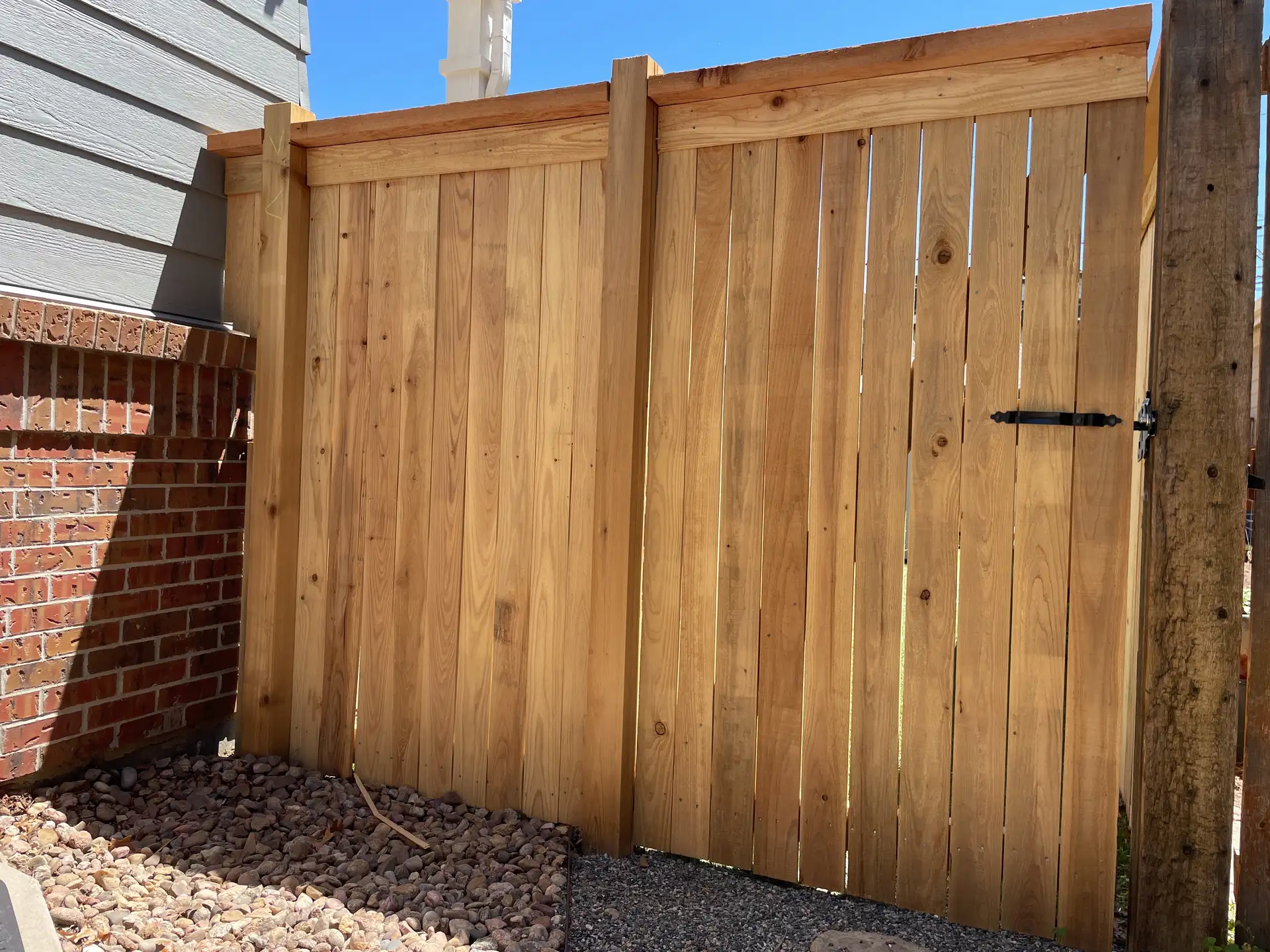
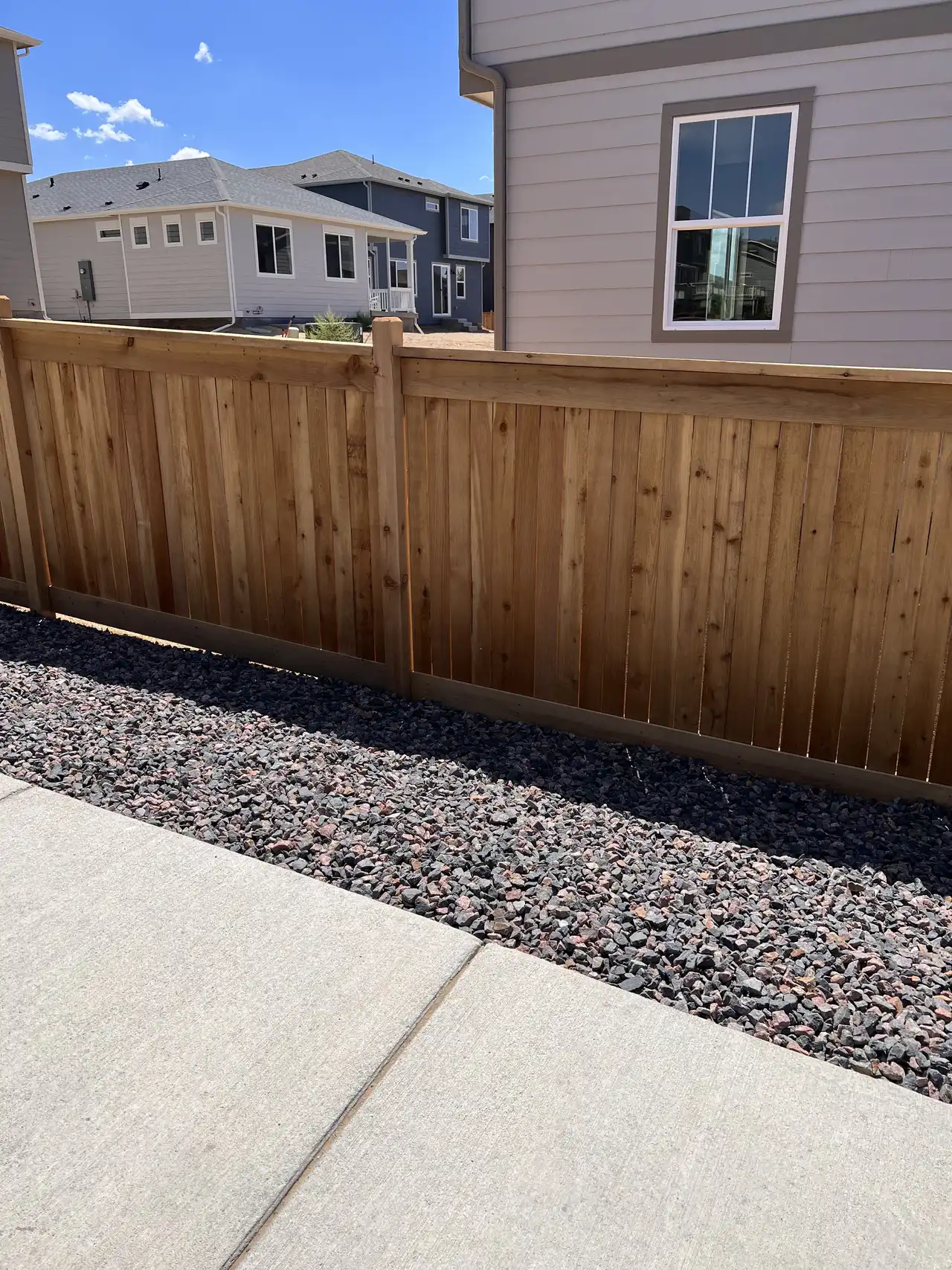
What comes with fence staining?
A free look at the fence and a written price
Jackson walks the fence, measures length and height, checks which sides can be reached and asks what you want it to look like. You get a written price, usually the same day. On a staining job we look at the wood board by board.
A check of the wood before any stain goes on
Stain protects sound wood. It doesn't fix a rotted post or cracked picket or straighten a leaning section. So we first tell you what shape the fence is in. If a few boards or a post need replacing, that comes first, and we repair any fence. New and old boards are then stained together.
Help with your HOA's color
Some HOAs name the color, some the type of stain. The HRCA requires "Highlands Ranch Fence Brown" in a solid stain and publishes mix formulas. Sub-associations in Highlands Ranch can set their own approved color. Tell us your HOA and bring any color sheet. We help you check the rule before the color is chosen.
Staining for new and weathered cedar
We stain cedar we've just built and cedar that's stood for years. New wood takes stain fresh and bright. Weathered wood has already greyed, which changes how a color looks once on. Jackson will explain what to expect on your boards before you commit.
A finish you can check
Look at coverage on the pickets, rails and post tops, and check gates on both faces. If you see a missed spot, tell us. Tim D. wrote that on his cedar fence replacement the crew "swept the sidewalk and even the street."
How does fence staining work?
Book
Book online or call (303) 803-6206. Tell us roughly how long the fence is, whether it's new or weathered and whether you want one side or both stained. If your HOA sent a letter about the fence, mention it. Jackson meets you at the house and measures.
Settle the color and the HOA rule
Choose the color and how much grain you want to see. If you're in an HOA, check its rule first. In Highlands Ranch the color is set for public-facing fences, and fences belonging to the Highlands Ranch Metro District need the district's approval before staining.
Repairs first
Loose pickets, a broken rail or a soft post get fixed before staining. It costs less to stain once, after repairs, than to stain around a problem and come back.
Stain day
Stain needs dry wood and dry weather, so the date is set around the forecast. From April to September we watch for afternoon storms. Before the crew arrives, move patio furniture, grills and planters away from the fence and keep pets inside.
Check the finish
Look at both sides if both were stained: coverage, gates and the ground along the line. Tell us if anything was missed.
Why does a cedar fence go grey so fast in Colorado?
Altitude. The air above Denver is thinner, so less UV is filtered before it reaches your fence. The WHO puts the increase at about 10 percent per 1,000 meters, so roughly 16 percent more at 1,609 meters.
UV breaks down the surface of bare wood. The warm cedar color fades first, then the surface turns grey. Grey wood isn't ruined, but it's unprotected and soaks up water more easily.
Water is the other half. Hail season runs April to September. Winter snow piles against the pickets and melts slowly. Sprinklers wet the same boards every summer morning. Wood that wets and dries over and over cracks and cups.
Stain slows both. Its pigment blocks UV, and the stain sheds water. That's the case for staining in one line: it protects wood from Colorado sun and weather so it lasts longer.
What stain color does your HOA require?
Check before you buy a gallon, because an HOA can decide the color for you. Highlands Ranch publishes a detailed rule that's a good example of what to look for in your own covenants.
Section 2.30 of the HRCA's Residential Improvement Guidelines requires regular maintenance and staining of fencing. Staining is required for any fence, or part of one, that faces or abuts a street, another front yard, a park, a school or commercial property, including wing fences (the short runs between the front corners of neighboring homes). It is not required for interior-facing rear and side yard fences or open space fencing.
The color is fixed: "Highlands Ranch Fence Brown," in a solid stain. The ARC can deny colors that aren't that brown. The guidelines print mix formulas in two product lines, Behr Deck Plus solid color stain and Sherwin-Williams SuperDeck solid color stain, and name Home Depot, Ace Hardware, Sherwin-Williams and Guiry's as local vendors that can help match it. Those are the HRCA's references, not a statement about which stain Regal uses.
Two catches:
- In a Highlands Ranch sub-association, ask that association for its approved color, which can differ.
- A fence belonging to the Highlands Ranch Metro District, or on district land, needs district approval before staining.
Outside Highlands Ranch, ask your HOA 3 questions: is a color required, is a stain type required, and does staining need approval first? We help you find the answers at the estimate.
When is the best time of year to stain a fence?
When the wood is dry and the weather will stay dry long enough for the stain to cure. On the Front Range the forecast matters more than the calendar.
Every stain's label gives its temperature range and drying time, and those numbers count. Stain applied outside its range, or rained on before curing, won't last as it should.
Each season has a catch. Spring and summer bring warm days and afternoon thunderstorms, with hail April to September. Fall is dry and mild but shorter. Winter brings cold snaps and snow against the boards. A dry stretch in any warm month works. A wet week doesn't.
Avoid wet wood: rain, snowmelt and sprinklers. If sprinklers hit the fence, turn that zone off before stain day and leave it off until the stain has dried.
For a just-built fence, new wood has to be dry enough to take stain. Ask Jackson how he'd time it.
Should you stain, seal or paint a wood fence?
Stain is the usual answer for cedar. The choice inside stain is how much wood you want to see.
- Clear sealer: Sheds water and keeps the wood natural. No pigment, and pigment is what blocks UV, which is a real limit at this altitude.
- Transparent or semi-transparent stain: Adds color and lets the grain show. Suits new cedar.
- Solid stain: Covers the grain with an even, opaque color, closer to paint. It hides differences between old and new boards, which helps on a weathered fence with repairs. It's also what the HRCA requires.
- Paint: Sits on the wood as a film. When a film fails, it peels, and a peeling fence must be scraped before redoing. That's the main argument for stain over paint. If your HOA requires paint, follow the HOA.
Tell Jackson the look you want, and he'll tell you honestly what your boards will look like with each.
Can you stain an old, grey fence?
Yes, if the wood is still sound. Grey is a surface color change, not the end of a fence. What matters is what's under it. Check 3 things:
- Push on the posts. A post that rocks is a repair, not a staining job.
- Press a thumbnail into a few pickets near the ground. Firm is fine. Soft or crumbling is rot.
- Look along the top of the fence for a wave, which means posts have moved.
A fence that passes can be stained at 10 or 20 years old. Grey boards soak up more stain than fresh ones, so a solid stain gives the most even finish on older wood.
A fence that fails needs repair first, or replacement, and we'll tell you which. There's no sense staining boards coming down next year, and we'd sooner lose the job than sell you one that doesn't make sense.
What changes the price of fence staining?
Staining is priced in writing after a free on-site estimate. We don't publish a price per foot, because square footage and wood condition change everything.
- Surface area: A 200-foot, 6-foot-tall fence has 1,200 square feet on one side and 2,400 if both are stained. Height, length and sides set the stain and time needed.
- Style: Board on board has overlapping pickets and cap and trim has extra pieces along the top, so both have more surface and edges than flat-top or dog-ear of the same length. Rough-sawn cedar soaks up more than smooth lumber.
- Condition: A weathered fence is thirstier than a new one. Repairs, if needed, are priced separately and done first.
- Access: A side facing a neighbor's yard, a tight gap behind a shed or a line planted with shrubs takes more care.
If you're staining a new Regal fence as part of an install, ask about Wisetack financing (subject to credit approval) and our senior, veteran and military discounts.
Which fences never need staining?
Vinyl and composite: "no staining or repairs," and composite also cuts street noise. If you're tired of staining, those are the way out.
Check your HOA first. The HRCA prohibits plastic and vinyl fencing. It accepts composite with approval and names the Trex color Saddle as acceptable, with other brands required to come close.
Ornamental steel, aluminum and chain link don't take stain either. They suit yards where an open view matters more than privacy.
Cedar privacy fencing is still our specialty, and some HOAs specify it. If you want the look of wood, stain is the upkeep that comes with it.
Where do we offer fence staining?
We work from our Aurora office at 3778 S Walden St, concentrating south of Colfax Avenue down through Douglas County to Castle Rock. We also stain in Denver, Lakewood and the north metro to Longmont. West of Evergreen is past our range.