


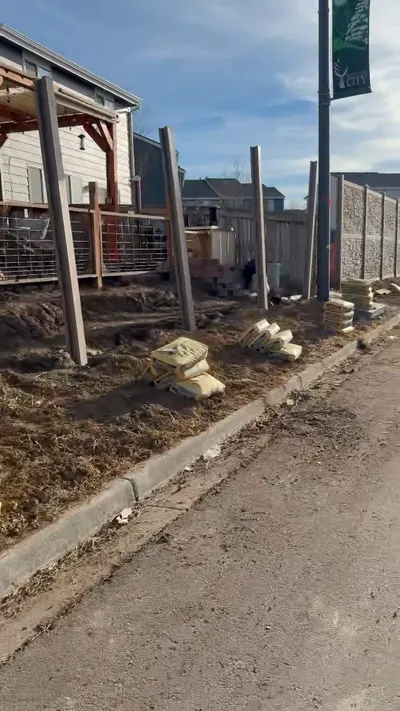
A commercial fence does one of two jobs: it keeps people and vehicles out of a place, or it shows where a property starts and stops. We describe our commercial work as "security and boundaries for businesses, properties and job sites." Regal is a father-and-son company run today by Jackson Vann: "We have been installing fences for 20+ years." To be straight about the mix: residential is our main focus, and commercial is a real part of the schedule. In October 2026 Jackson was, in his words, "finishing up a big commercial project."
Our office is at 3778 S Walden St in Aurora, and we focus south of Colfax Avenue through Centennial, Parker and Littleton down to Castle Rock.
Ground and wind count for more. A commercial line is longer and more exposed than a backyard fence. Frost depth is 36 inches in Aurora's Engineering Design Criteria and Douglas County's amendments to the 2021 International Residential Code. The Colorado Geological Survey names montmorillonite as Colorado's main swelling clay and reports that the bedrock carrying it lies under every major Front Range city, and a long perimeter crosses a lot of that ground. On wind, a 21-year record from the National Renewable Energy Laboratory's Flatirons Campus counted 1,172 downslope windstorms near Boulder, about 56 a year.
The rulebook changes with the city. Denver wants a zoning permit for any fence over 4 feet. Centennial and Littleton want a permit for every fence. Aurora asks for a building permit only above 7 feet. Zoning district, corner visibility and wire type on top can all change the answer. That's why every commercial job starts as a house does: Jackson walks the site, measures the line, looks at gates and access and gives you a written price. The site walk is free.
What comes with commercial fencing?
A free site walk and a price in writing
Jackson walks the perimeter with you, measures every run and notes gate openings, slope and how trucks and materials will get in. What changes a commercial price is found on the ground, so we put more time into this walk than most. It costs nothing, and the price comes in writing.
Security and perimeter fencing
Chain link, ornamental steel, aluminum and wrought iron for lots, yards and building perimeters. Chain link is the working choice for a secured lot or job site. Steel, aluminum and iron hold a line and still look finished from the street. Plenty of fence companies avoid metal work. We take it on, custom iron gates included.
Gates sized for vehicles and people
A commercial fence is only as useful as its gates. We build single and double swing gates for people and service access, and sliding or rolling gates, "heavy duty gates for larger spaces." We also build custom gates, including custom iron, for an entrance that has to look good as well as close. Tell us what must fit through: delivery trucks, trailers, mowers or foot traffic.
Screening, privacy and sound
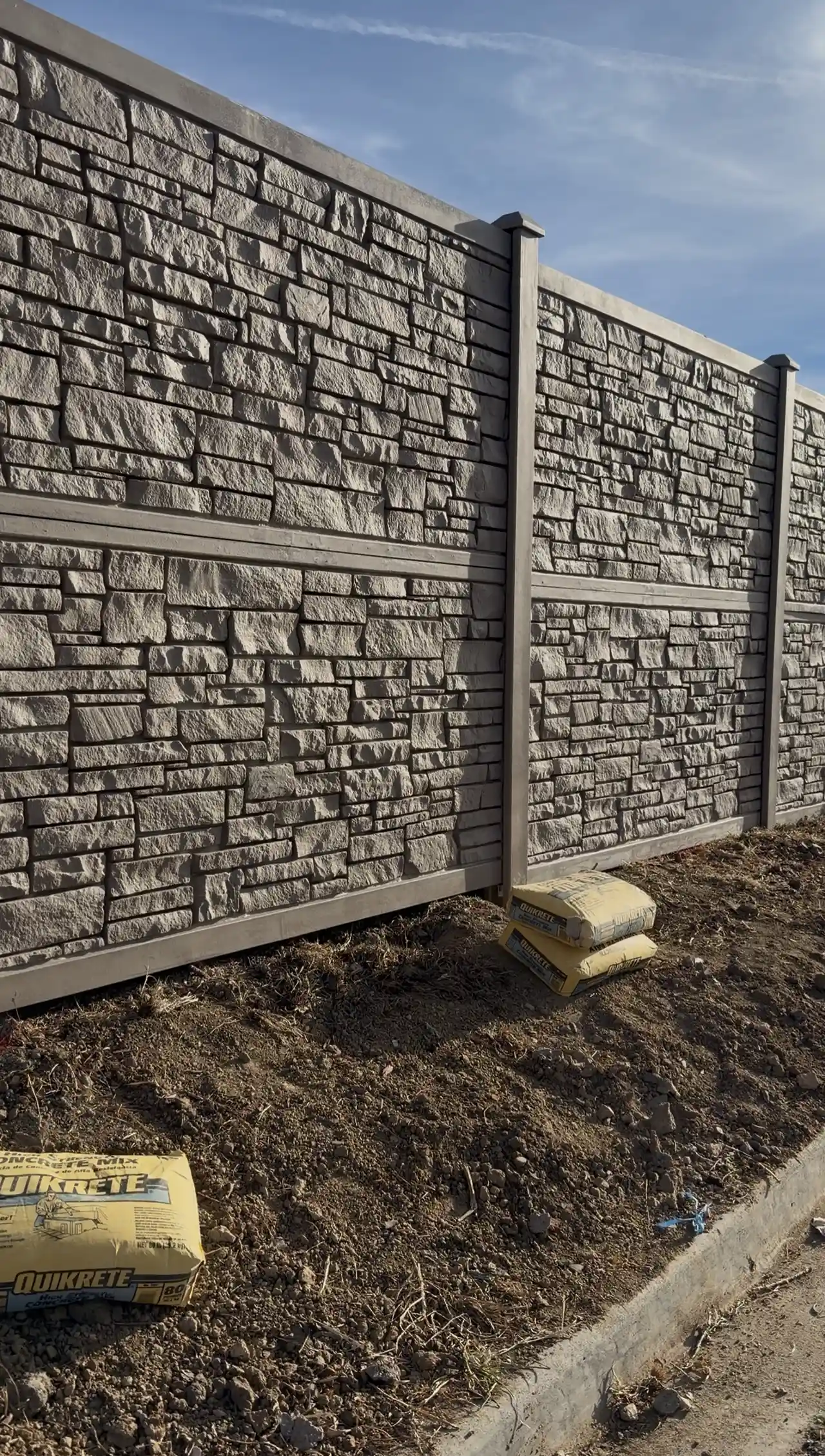
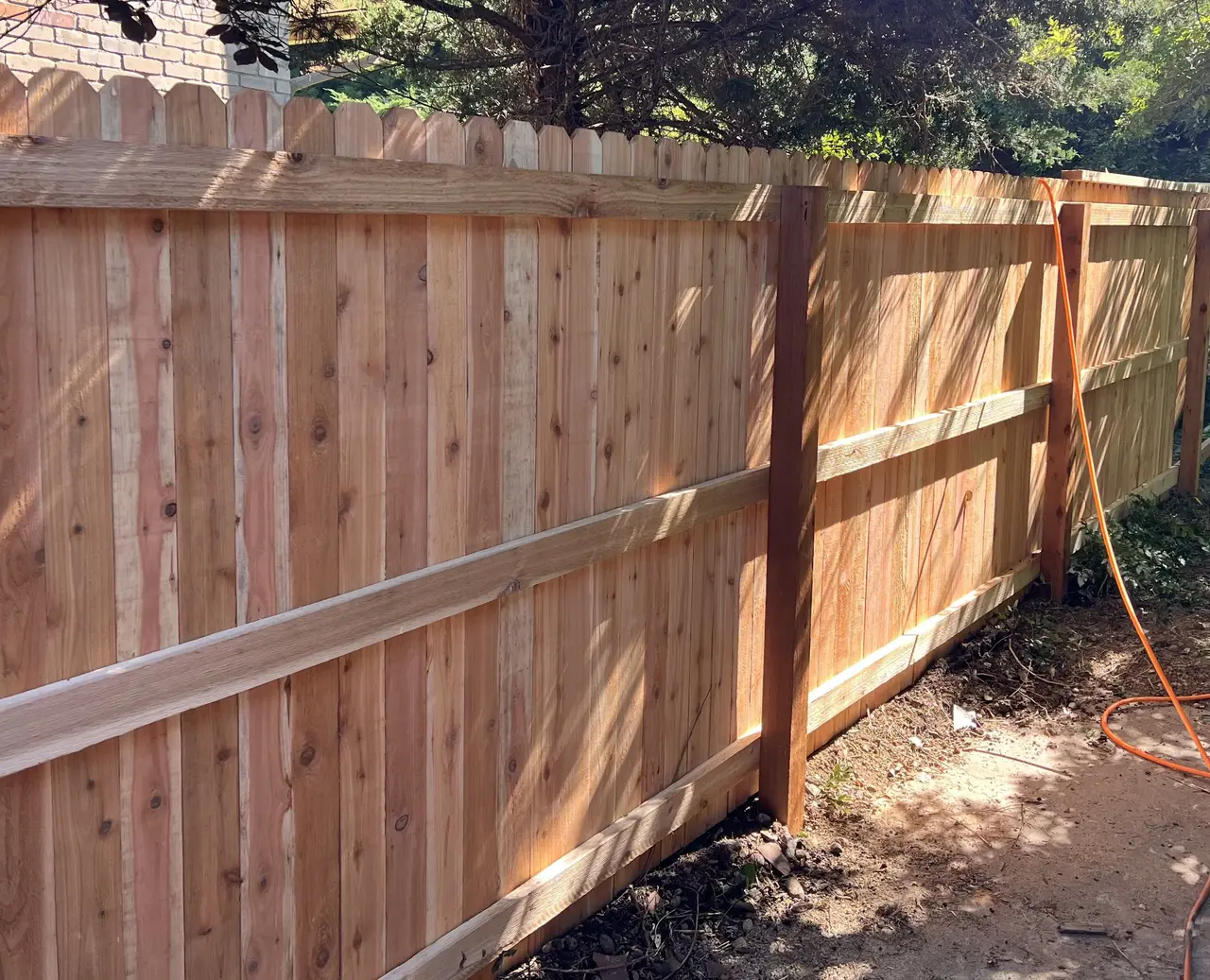
Some fences hide something or quiet something. We build cedar and vinyl privacy fencing, composite (which cuts street noise) and precast concrete, which we describe as "tall, quiet and permanent walls along busy roads, with almost no upkeep." For large open properties we build hog wire, post and rail, split rail and 3-rail ranch fencing, which mark a line and keep the view.
Locates, permit guidance and a final walk
We file the Colorado 811 locate before any post hole is dug. We tell you what your city's published fence rules say and point you to the page. If our crew damages a sprinkler line, we fix it at no cost to you. Every install is inspected, and we walk the finished fence with you.
How does a commercial fence project run?
Walk the site
Call or book online and Jackson meets you at the property. Bring a site plan or survey if you have one. He measures the perimeter, counts the gates and checks ground and access. Tell him what the fence has to do: keep a lot secure after hours, screen a storage area or mark a boundary.
Settle the scope
You choose material, height and gates, and we put the price in writing. Tell us about business hours, deliveries, tenants and anything else the crew must work around. If an old fence has to come out first, that goes in the scope.
Check the rules and mark the lines
We tell you what the city's published rules say about height, materials and permits for your address. Then we file the 811 request 3 business days before we dig (the law asks for 2). If the property has irrigation, show us where the lines run.
Build the fence
The crew sets posts, hangs fabric, panels or pickets, and builds and hangs gates. A backyard takes 1 to 2 days. A commercial perimeter takes as long as its length, gates and ground call for, so ask Jackson for the expected days on site with your price.
Walk the finished line
Every install is inspected. We walk the full fence with you or your site manager, open and close every gate, check each latch and clear the site. If something isn't right, say so on that walk and we'll handle it before the crew leaves.
What type of fence is best for a commercial property?
The one that fits the job. Start with the job, then check what your city and zoning allow.
- Security on a working lot: Chain link is the practical choice. It's open, so wind passes through and you can see the other side. We'd look at it first for a secured yard, side lot or job site.
- Facing customers, tenants or a street: Ornamental steel, aluminum and wrought iron. They mark a clear boundary without blocking the view of the building. We build custom iron gates to match.
- Screening: A solid fence. Cedar and vinyl privacy fencing hide a storage or service yard. Composite does the same and cuts street noise. Precast concrete is the heaviest answer: a tall, quiet, permanent wall along a busy road with almost no upkeep.
- Acreage and large open properties: Hog wire, post and rail, split rail and 3-rail ranch mark the line, hold in animals and keep the view.
One site can use two. Ornamental metal along the street side and chain link around the back is one way to split it. Jackson will talk through where each makes sense on the site walk.
Do you need a permit for a commercial fence in the Denver metro?
In most cities, yes, and the trigger changes at every city line. These are the published rules where we work.
- Denver: Zoning permit for any fence over 4 feet, and a building permit for post-hole fences over 8 feet. General limits are 4 feet in front of the street-facing facade and 6 feet on the side and rear, set 6 inches back from a public sidewalk. Any fence on a landmark property, in a historic district or on a parkway needs a permit.
- Centennial: Permit for all new fences. Limits of 4 feet in front and 8 feet on the side and rear.
- Littleton: Permit for every fence, and stamped engineering over 7 feet.
- Unincorporated Arapahoe County: Permit for every fence, plus a 16-foot sight triangle and 8-foot corner setback so a fence doesn't block the view at an intersection.
- Aurora: Building permit only above 7 feet.
- Parker: Permit above 6 feet.
- Unincorporated Douglas County: Permit line also above 6 feet. A fence must never sit in the public right-of-way or block a driver's view.
One caution for commercial owners. These are each city's general published rules. A commercial or industrial zone district can carry its own limits on height, material and placement, and an approved site plan can add conditions. Confirm the rule for your parcel with the planning office before you order material.
We give permit guidance on every job. We won't promise a fence needs no permit until the city's own page says so, and we'll point you to that page.
Can a commercial fence have barbed wire or razor wire?
Barbed wire in some places, razor wire in fewer. The answer comes from the city or county, not the fence company.
- Unincorporated Douglas County: Allows barbed wire and electric fencing (electric fences must be posted). Bans concertina and razor wire outright.
- Unincorporated Arapahoe County: Allows no barbed or electric wire outside its agricultural and industrial zones.
So the same design can be legal on one side of a county line and a violation on the other. Ask before you design around a wire top. Tell Jackson what you're trying to stop, and he'll tell you which fence height, material and gate we'd build and which rule page to check first.
What changes the price of a commercial fence?
Every fence is priced in writing after we've walked the site. We don't publish a price list, and for commercial work one would mislead, because two properties of the same size can price very differently.
- Length and height: More feet means more posts and material, and a taller fence uses more of both.
- Material: Chain link, ornamental steel, aluminum, wrought iron, cedar, vinyl, composite and precast concrete each sit at a different point.
- Gates: A walk gate is simplest. A double gate costs more, and a sliding or rolling gate for a wide vehicle opening, or a custom iron gate, more again. Count the openings before comparing two quotes.
- Ground and access: Slope, rocky soil, pavement along the line and tight room for trucks add time. So does removing and hauling away an old fence.
- The city: A permit is one item. Engineering is another: Littleton asks for stamped engineering on any fence over 7 feet.
On billing, ask how your project will be invoiced. Our one-off and residential jobs run through one system, and some commercial clients are invoiced through QuickBooks.
How does Front Range weather affect a commercial fence?
It decides how posts are set and how much wind the fence carries. A commercial fence has more length and exposure, so both count for more.
- Footings: Frost depth is 36 inches in Aurora and Douglas County codes. Soil above it freezes and thaws every winter, and swelling clay moves each time it wets and dries. Ask any bidder how its footings deal with that.
- Wind: The National Weather Service in Boulder documented the 30 December 2021 downslope windstorm, and a University of Colorado summary reports gusts of 68 to 108 mph near the Marshall Fire and 115 mph in Arvada. Aurora sees weaker gusts, but an open lot has little to slow the wind. Chain link and ornamental metal let air through. A solid screen takes the full push.
- Hail: The Rocky Mountain Insurance Information Association ranks Colorado second in the country for hail insurance claims, with hail season April to September. We won't call any fence material hail proof.
What should you ask a commercial fence company before you sign?
Ask every bidder the same questions, us included, and compare the answers side by side.
- **Is the price in writing, and does it list gates one by one?** Ours is written after a free site walk.
- **Who files the 811 locate?** We do, 3 business days before digging.
- **Who checks the fence rules?** We tell you what the city publishes and where to confirm it for your zone.
- **Who builds the fence, and for how many days?** We run our own crews, and Jackson will tell you who's building yours and how long they expect to be on site.
- **What if an irrigation line gets hit?** We fix any sprinkler line our crew damages at no cost to you.
- **How deep do the posts go?** Get the depth in writing. Regal sets posts 24 to 36 inches deep.
- **How is the job invoiced?** Ask up front so your accounts team knows what to expect.
Then read the reviews. We hold a 4.5 rating from 93 Google reviews, all on our Google profile. Residential is our main focus, so read them for what carries over to any job: showing up on time, clear communication and cleanup.
Where do we offer commercial fencing?
We take commercial work from our Aurora office at 3778 S Walden St, mostly south of Colfax Avenue from Aurora down to Castle Rock. We also build in Denver, Lakewood and the north metro up to Longmont, and stop around Evergreen to the west.