

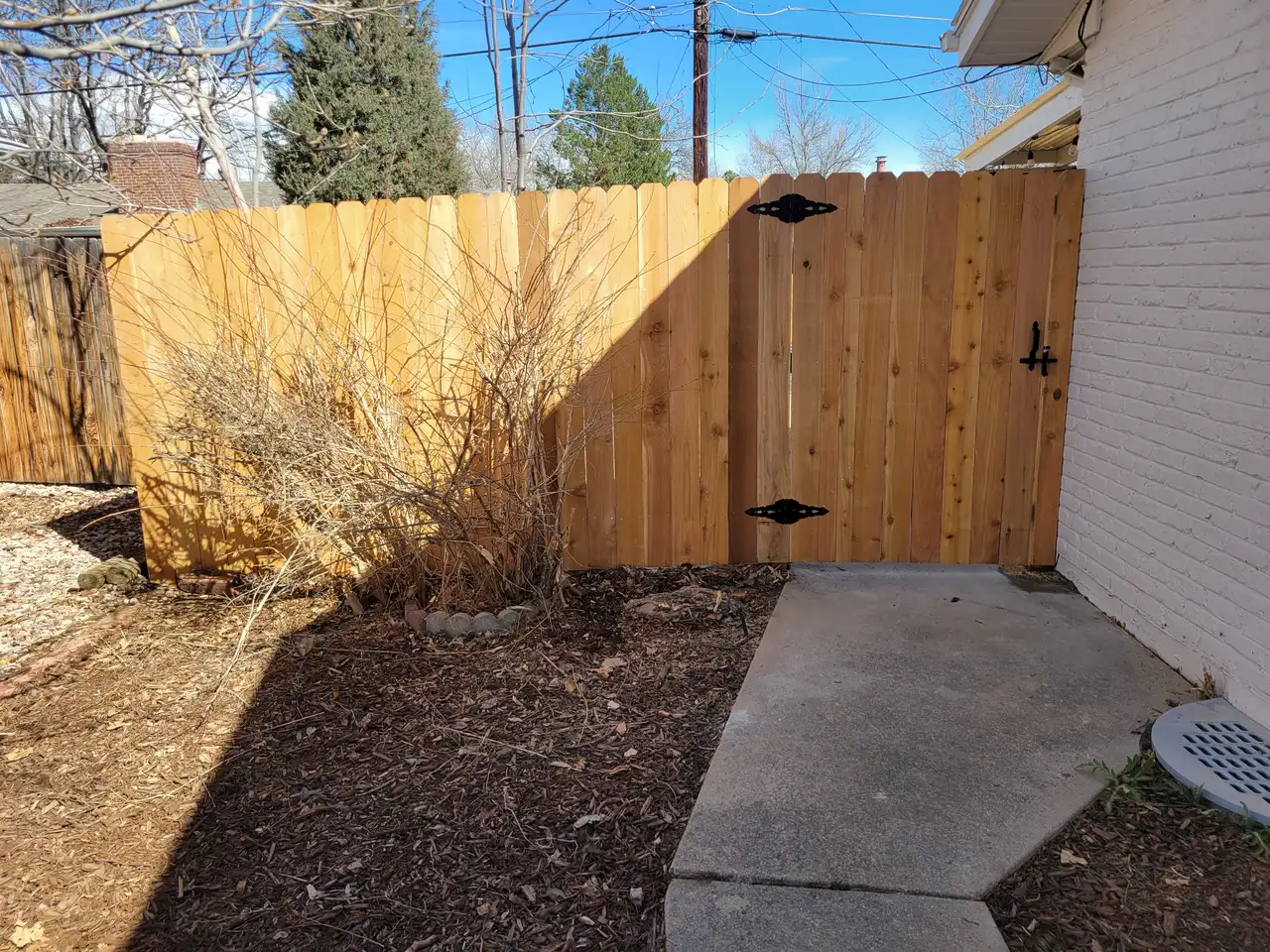

A repair should cost a fraction of a new fence and leave you with a line that stands straight. Regal repairs any fence: cedar, vinyl, composite, chain link, ornamental steel, aluminum and wrought iron. Owner and estimator Jackson Vann says repair "fixes leaning posts and storm damage for much less than a new fence." He comes to your house, tests the posts, looks over the rails and pickets and writes up a price. The visit is free. Our office is at 3778 S Walden St in Aurora, and we repair across the same ground where we build, from Aurora and Centennial through Parker and Littleton to Highlands Ranch and Castle Rock.
A lean starts below the grass. Aurora and Douglas County codes both put frost depth at 36 inches. Soil near the surface freezes in winter and thaws in spring, and frozen ground can grip a post and lift it a little each year. The Colorado Geological Survey describes a second force: half of the 30 sedimentary bedrock formations in the Front Range Urban Corridor contain swelling clay, and they lie under every major city here. Wet clay pushes on a post. Dry clay pulls away and leaves it loose.
Then weather finishes the job. A 21-year record from the National Renewable Energy Laboratory's Flatirons Campus logged 1,172 downslope windstorms near Boulder, about 56 a year, busiest in January. Aurora gets weaker gusts than Boulder or Arvada, but a solid 6-foot fence with a loose post doesn't need a record gust to go over. Hail season runs April to September, and the Rocky Mountain Insurance Information Association ranks Colorado second in the country for hail claims.
Regal is a father-and-son company: "We have been installing fences for 20+ years." Much of what we know about repairs comes from seeing how fences fail here.
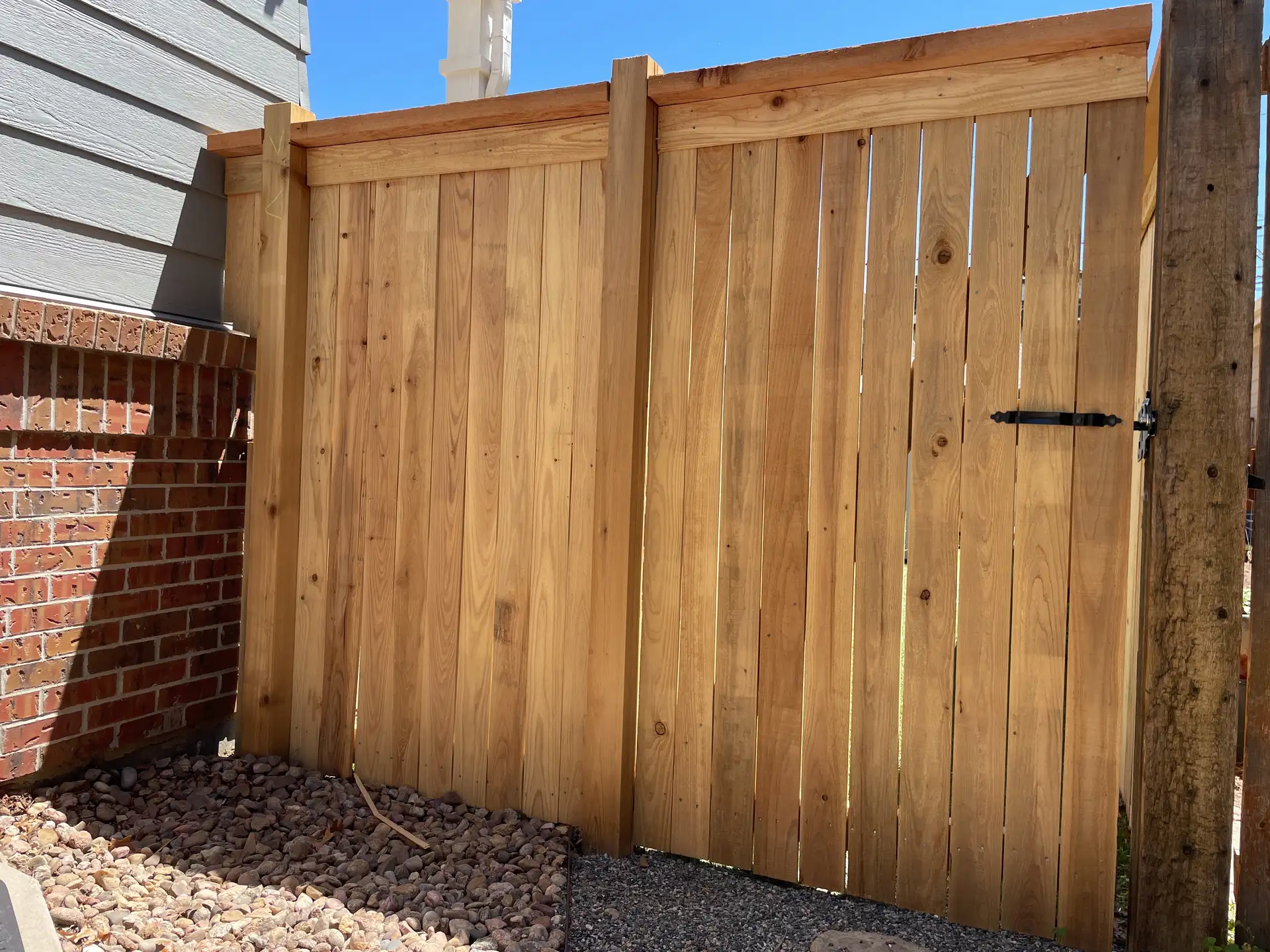
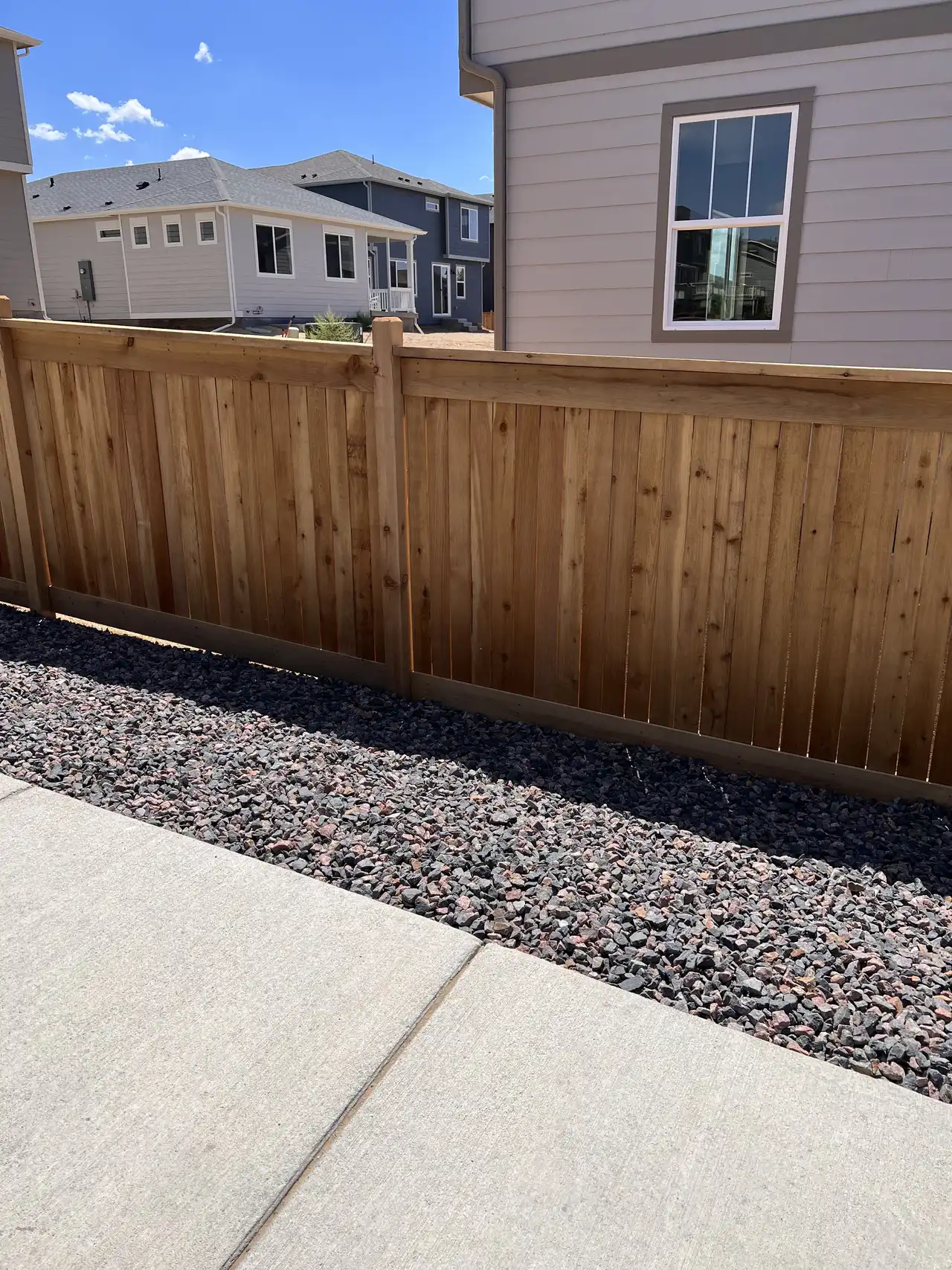
What comes with fence repair?
Leaning and broken posts
The post holds everything up, so Jackson checks it first. A post that rocks in its footing, one rotted through at ground level and one snapped in a storm are three different repairs. When a post must be replaced, the old one comes out and the new one goes into a new footing. Ask about our free steel posts.
Storm damage
Wind takes down whole sections. Hail splits pickets and chips finishes. A limb or a car can open a hole in an afternoon. We rebuild the damaged run and tie it into the fence still standing. One job we're proud of had nothing to do with weather: a vehicle went through a customer's fence, the family had children and dogs, and we moved our schedule to replace it the same day.
Pickets, rails and panels
Cracked or missing pickets, a rail pulled off its post, a vinyl panel popped from its channel and a bent stretch of chain link are all fixable on their own. New cedar pickets start brighter than the weathered boards beside them. A coat of stain evens that out, and we stain fences too.
Gates that sag, drag or won't latch
A gate is the only moving part of a fence, so it wears first. When it drags or the latch misses, the cause is the hinge post, the frame or the hardware. We find which and fix that. If the gate is past saving, we build gates: single, double, sliding and custom iron.
A straight answer on repair or replace
Some fences aren't worth repairing, and we'll say so. If posts lean in several places and rails are letting go along most of the line, another repair buys a season, not a fence. Jackson will tell you which side you're on and give you a written price for the repair, the replacement, or both.
How does a fence repair work?
Tell us what happened
Book a free on-site estimate online or call (303) 803-6206. Describe what you see: a lean, a section down, a gate that won't close. Mention pets, kids and any neighbor who shares the line. If a storm took it down and you plan to file a claim, say so up front.
Jackson checks the fence on site
He walks the whole line, not just the broken part. He tests each post for movement and ground-level rot, checks how the rails attach and notes the material. The damage you can see from the patio is rarely the full story.
Get a written price
Usually the same day. If replacing would be the better use of your money, the estimate says so. We'll also tell you what we know about your HOA and city, such as the 25 percent rule in Highlands Ranch.
Locates and scheduling
A repair that needs a new post hole is still digging. Colorado law (C.R.S. 9-1.5-103) requires an 811 notice at least 2 business days before any hole is dug, and Colorado 811 asks for 3. We file the locate so gas and power lines are marked first.
Repair and check
The crew makes the repair and cleans up. Afterward, push on the repaired posts, swing the gate and check the latch. If something isn't right, call us.
Is it cheaper to repair or replace a fence?
A repair is cheaper when the damage is in 1 place. We describe a repair as costing "much less than a new fence," and that holds while most of the fence is sound. The question is how much is.
- Posts: Walk the line and push each one at chest height. A sound post doesn't move. If 1 or 2 rock and the rest are firm, it's a repair. If posts lean at several points, the footings are failing together and each fix buys less time.
- Cedar rails and pickets: Check where rails meet posts and pickets meet the ground. Rails pulled away in 1 bay can be reattached. Soft, crumbling wood along most of the bottom edge means the fence is at the end of its life.
- Vinyl: A cracked panel or popped rail is a repair if the posts are plumb.
- Chain link: A bent top rail or torn mesh in 1 stretch can be replaced without touching the rest.
- Ornamental steel or aluminum: A bent panel swaps out if the posts held.
Condition matters more than age. A fence with good posts and a few broken boards is worth repairing at any age. A newer fence with shallow, loose footings along the whole line may not be.
When the answer is replacement, it becomes a full installation: old fence out, new posts and footings in. It's the moment to fix what never worked, such as a gate too narrow for the mower, or wood posts you'd swap for steel. Tim D. made that swap on a 6-foot cedar privacy fence and wrote: "We went back with the metal posts instead of 4x4 cedar posts."
Can't tell which side you're on? That's what the free estimate is for. Jackson will price the repair and tell you plainly whether it's worth doing.
Why do fence posts lean in Colorado?
Three things move a post on the Front Range: frost, clay and wind. They all work on the same weak point, the few feet of post and footing below the grass.
- Frost: Code frost depth is 36 inches in Aurora and Douglas County. Water in the soil freezes and expands, then thaws and settles, and frozen ground can grip a post and lift it. Over enough winters the fence above it shows the lean.
- Clay: The Colorado Geological Survey maps swelling clay in the bedrock under every major Front Range city. After a wet spring the clay grips a footing and shoves it sideways. In a dry August it shrinks and leaves a gap around the concrete, and the post has nothing holding it.
- Wind: A privacy fence is a solid wall, and all the force ends up in the posts. The National Weather Service in Boulder documented the 30 December 2021 downslope windstorm, and a University of Colorado summary reports a 115 mph gust in Arvada. Aurora sees weaker gusts, but a loose post doesn't take much.
- Rot: The quiet one. A wood post fails at ground level, where it stays damp, so the fence can look fine while the post is soft at the base. That's why we check every post at ground level, not only the leaning ones, and why some homeowners move to steel posts on a wood fence. Ask about our free steel posts.
What should you do when a storm takes down your fence?
Safety first, then paperwork, then the repair. A fence on the ground is an open yard, which matters most with dogs, kids or a pool.
- Keep pets and children away from the gap and from any section still standing but leaning. A panel held by 1 loose post can come down on its own.
- Take photos before anything is moved: the whole line, each broken post and whatever hit the fence.
- If the fence sits on a shared line, talk to your neighbor the same day.
- Make 2 calls: us for a free on-site estimate, and your insurer if you plan to file a claim.
We can't tell you what your policy covers. That depends on your policy and deductible. We can give you a written price describing the damage and repair to pass to your adjuster.
Hail season runs April to September, and downslope wind season peaks in January. After a big storm, every fence company in the metro gets the same calls the same morning. We can't promise a same-day repair, and we won't. We have moved our schedule for a family whose yard was left wide open, and we'll be honest about timing when you call.
What changes the price of a fence repair?
Every repair gets its own written price after Jackson has seen the fence. We don't publish repair prices, because a post in soft ground and a post in a concrete mow strip are different jobs.
- Count: How many posts, feet of rail, and pickets or panels. Posts cost more than boards, because a post repair means digging out an old footing and setting a new one. Broken pickets on sound posts are a much smaller job.
- Material: Cedar is simple to match. Vinyl, ornamental steel and aluminum panels must match the profile and color of the fence. Chain link is repaired by the stretch.
- Access and ground: A line behind a shed, along a retaining wall or over rocky soil takes longer than open lawn. Hauling away a downed section adds time.
- Gates: A repair needing a new hinge post is priced like a post repair plus hardware.
For larger repairs or a replacement, financing is available through Wisetack, subject to credit approval. Ask about senior, veteran and military discounts when you book.
Who is responsible for repairing a shared fence?
Ownership follows the property line. Colorado has no statute that splits fence costs between neighbors on ordinary home lots. The state's 50/50 boundary fence law, C.R.S. 35-46-112, covers farm and grazing land.
Start with your survey or plat to see whose side the fence sits on. A fence on your lot is yours to repair. A fence exactly on the line is something to work out with your neighbor, ideally before work starts. We can write the estimate so both households see the same numbers.
HOAs add their own rules. In Highlands Ranch, the HRCA's Residential Improvement Guidelines say a homeowner must repair, stain or recondition a damaged fence on their property at their own expense. Some fences there belong to, or sit on land of, the Highlands Ranch Metro District, and those need the district's approval before anyone touches them. If your fence backs onto open space or a main road, check who owns it before paying for a repair.
Do you need a permit or HOA approval to repair a fence?
The clearest written rule in our area is Highlands Ranch's 25 percent line. Swapping a few boards is maintenance. Rebuilding a quarter of the fence or more is something the HOA wants to see first.
Under section 2.30 of the HRCA guidelines, repairing or replacing 25 percent or more of an existing fence can require Architectural Review Committee approval. Less than 25 percent must be replaced like for like and meet current guidelines. Any replacement with new material needs approval.
City permit rules are written around new fences and differ by city. Aurora requires a building permit only above 7 feet. Centennial requires one for all new fences, Littleton for every fence, and Denver a zoning permit for any fence over 4 feet. If your repair replaces a whole run, ask your permit office whether it counts as a new fence. We'll share what we know about your city at the estimate and give permit guidance on our jobs.
Where do we offer fence repair?
We repair fences from our office at 3778 S Walden St in Aurora, focused south of Colfax Avenue between Aurora and Castle Rock. We also take repairs in Denver, Lakewood and the north metro up to Longmont. Evergreen is about as far west as we go.