

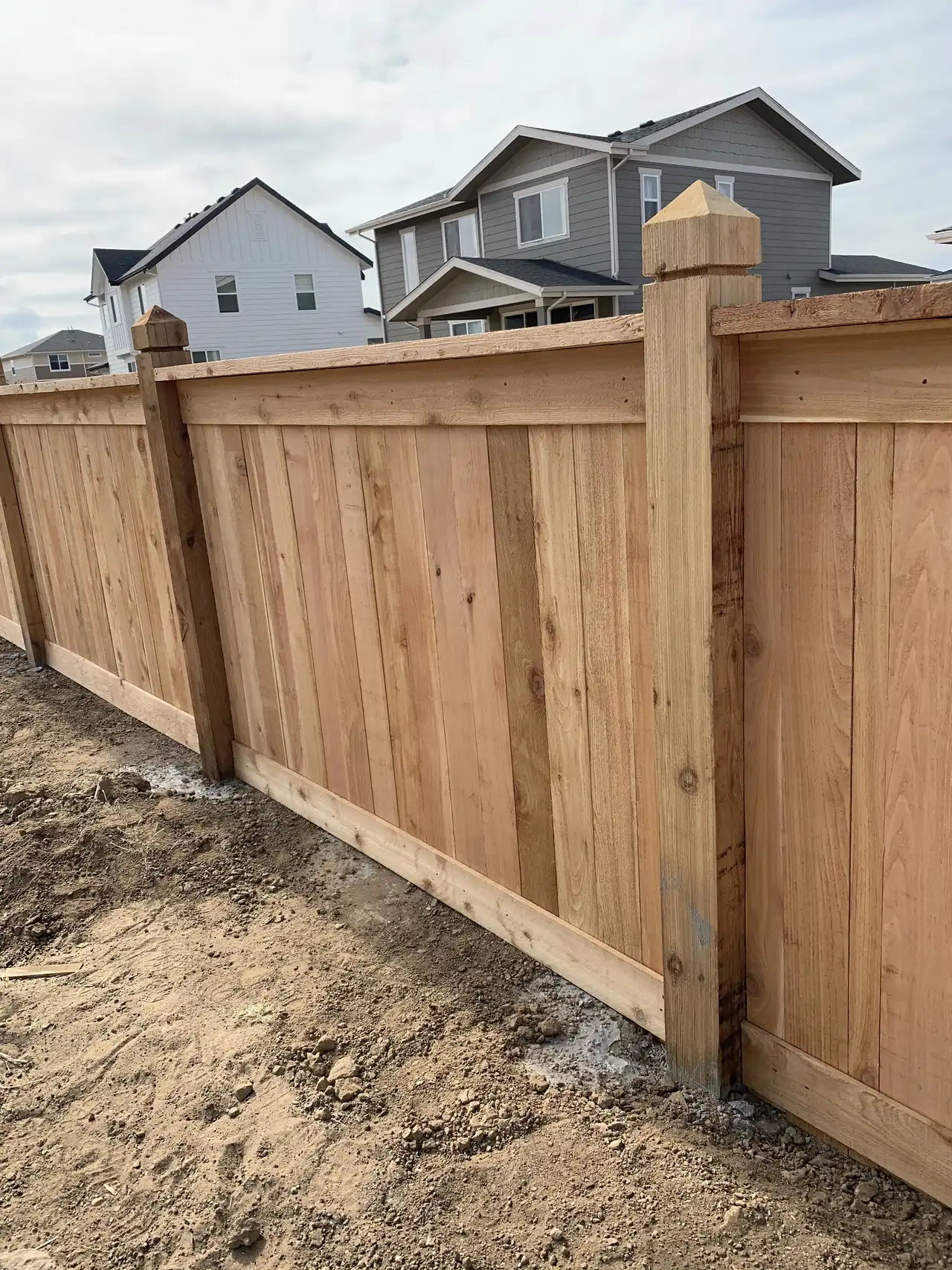

Centennial is a young city with a detailed fence code. It incorporated on February 7, 2001, from what had been unincorporated Arapahoe County, and it writes its own rules for height, placement and materials. Unlike several of its neighbors, it wants a permit for every new fence.
That makes the order of work different here. The permit comes first, then the utility locate, then the build. Skipping ahead is a risk, because the city says not to start construction until the permit is approved and the fees are paid.
Regal Fencing is a father-and-son fence company that works across the south metro. Jackson Vann, the owner and estimator, gives you a free on-site estimate with the details a Centennial permit application asks for.
How does Centennial weather treat a fence?
Centennial sits at about 5,722 feet, a little higher than Denver's 5,280. Colorado's hail season runs April to September, and Regal repairs storm-damaged fences. Wood also has to stand up to Colorado sun. Centennial's code accepts wood that is a weather-resistant species or is painted, or stained and sealed, so cedar and a stain are a good match for the rule and the weather.
What do Centennial fence jobs usually involve?
- Cedar privacy fences for side and rear yards, in flat top, dog ear, board on board, cap and trim and lattice top styles.
- Front yard fences at 4 ft or under, such as spaced picket, split rail and ornamental metal.
- Vinyl and composite fences, both on the city's list of allowed materials.
- Wrought iron and aluminum fences and custom iron gates.
- Fence repair for leaning posts and storm-damaged sections.
- Fence staining and sealing for wood fences.
- Chain link in interior side and rear yards, where the city allows it.
Do you need a permit to build a fence in Centennial?
Yes. The City of Centennial says a fence permit is required for all new fences and for the replacement of existing fences. You apply online through the city's Self-Service Portal.
The application needs two things. One is a site plan or survey showing where the fence sits in relation to the property line. The other is a photo or drawing of the fence that shows its height, material and color.
The fee is based on the value of the project, with a minimum review fee of $20. Permit fees and use tax have to be paid before the city issues the permit. The city says permits are processed in approximately five business days.
Jackson measures the yard and gives you the height, material, style and layout for the application. Build the five business days into your timeline.
How tall can a fence be in Centennial, and where can it go?
A front yard fence can be 4 feet tall at most. In the interior side yard, street side yard and rear yard, the limit is 8 feet.
A fence can sit on the property line, with one exception at the street. On the front and street side, it must be at least 6 inches from a sidewalk. Where there is no sidewalk, it must be 5 feet from the street.
Two more rules shape the layout. The city's sight triangle rules apply, which keep drivers' views clear. The finished side of the fence must face out toward any trail, open space, park or adjacent right-of-way.
An HOA can be stricter than the city. If your neighborhood has one, get its approval as well as the city permit. Regal helps with both.
Which fence materials does Centennial allow?
Most of what Regal builds. The city's list includes wood, ornamental wrought iron, powder-coated aluminum, vinyl, composite and masonry.
Chain link is limited. It is permitted only in interior side yards and rear yards that are not also street yards.
Some materials are out. Barbed wire is not permitted on residential parcels. The city also bars scrap lumber, plywood, sheet metal, and plastic or fiberglass sheets as fence materials.
Does fence repair in Centennial need a permit?
It depends on how much is being replaced. The city's permit page covers new fences and the replacement of existing fences. It doesn't spell out small repairs, such as resetting one leaning post.
So ask before the work starts. The city's Planning and Zoning Hotline is 303-754-3308, and it's the number the city gives for anyone unsure whether a permit is needed.
Regal repairs any fence, including leaning posts and storm damage, usually for much less than a new fence. Jackson will tell you at the estimate whether the fence can be repaired or is due for replacement. If it's replacement, the permit goes in first.
What does a Centennial fence job look like with Regal?
It starts with a free on-site estimate. Jackson measures, talks through materials and gates, and usually sends the written price the same day. The price depends on length, height, material, post type, gates and removal of the old fence.
Once the permit is approved, we request the Colorado 811 utility locate. State law requires 2 business days' notice before digging, and Colorado 811 asks for 3.
Most installs then take 1 to 2 days. If we damage a sprinkler line during the install, our sprinkler line guarantee means we fix it for free.