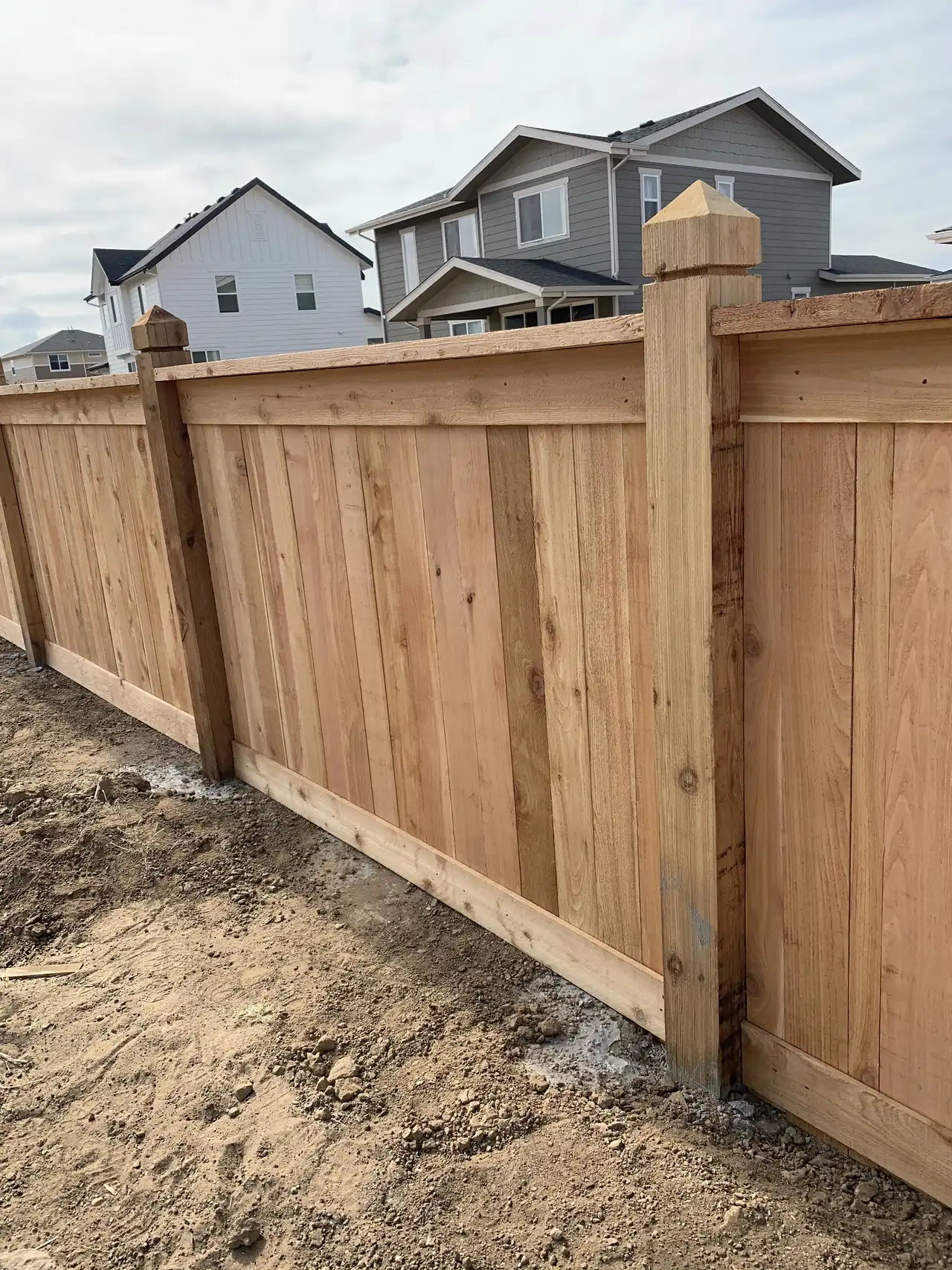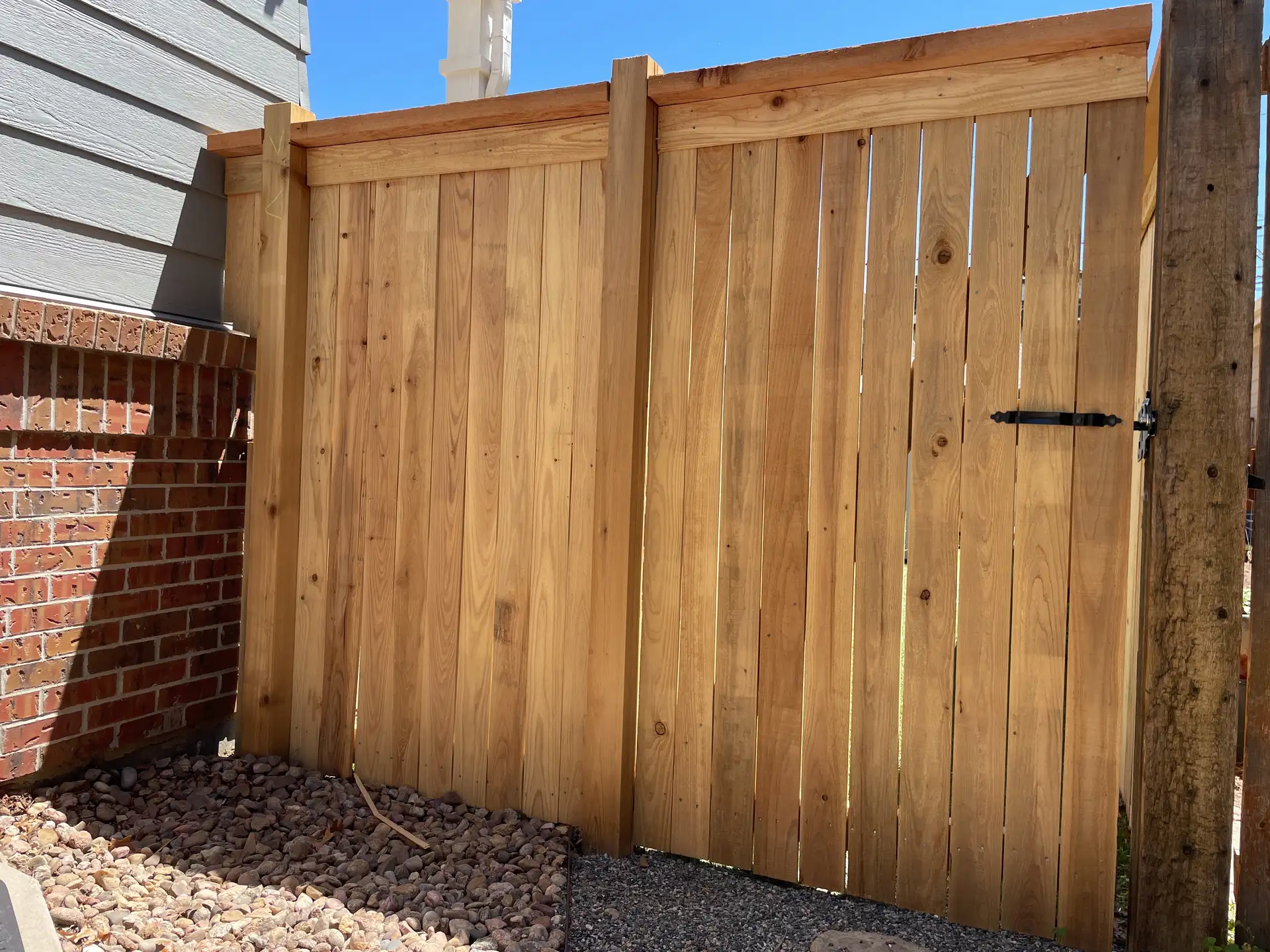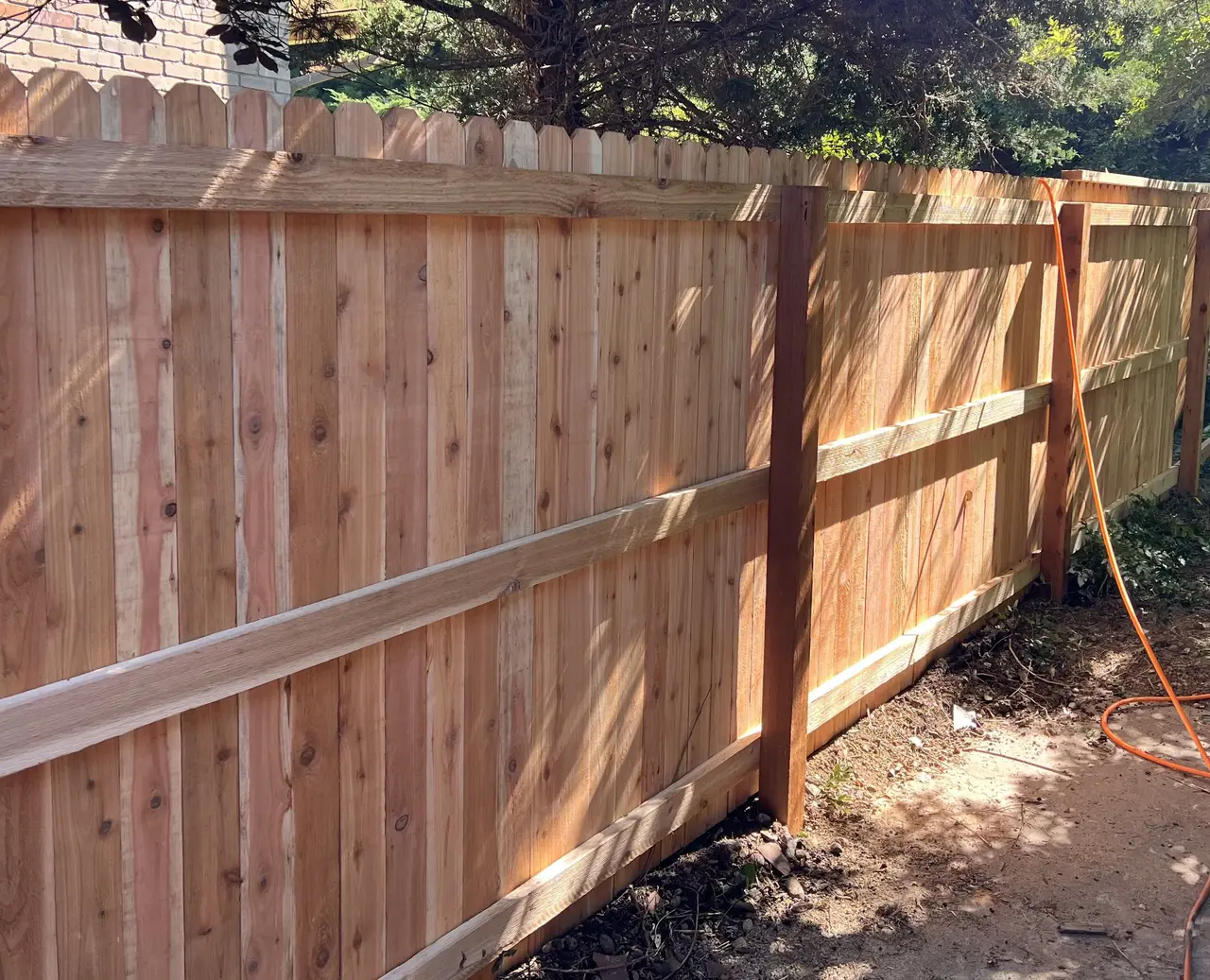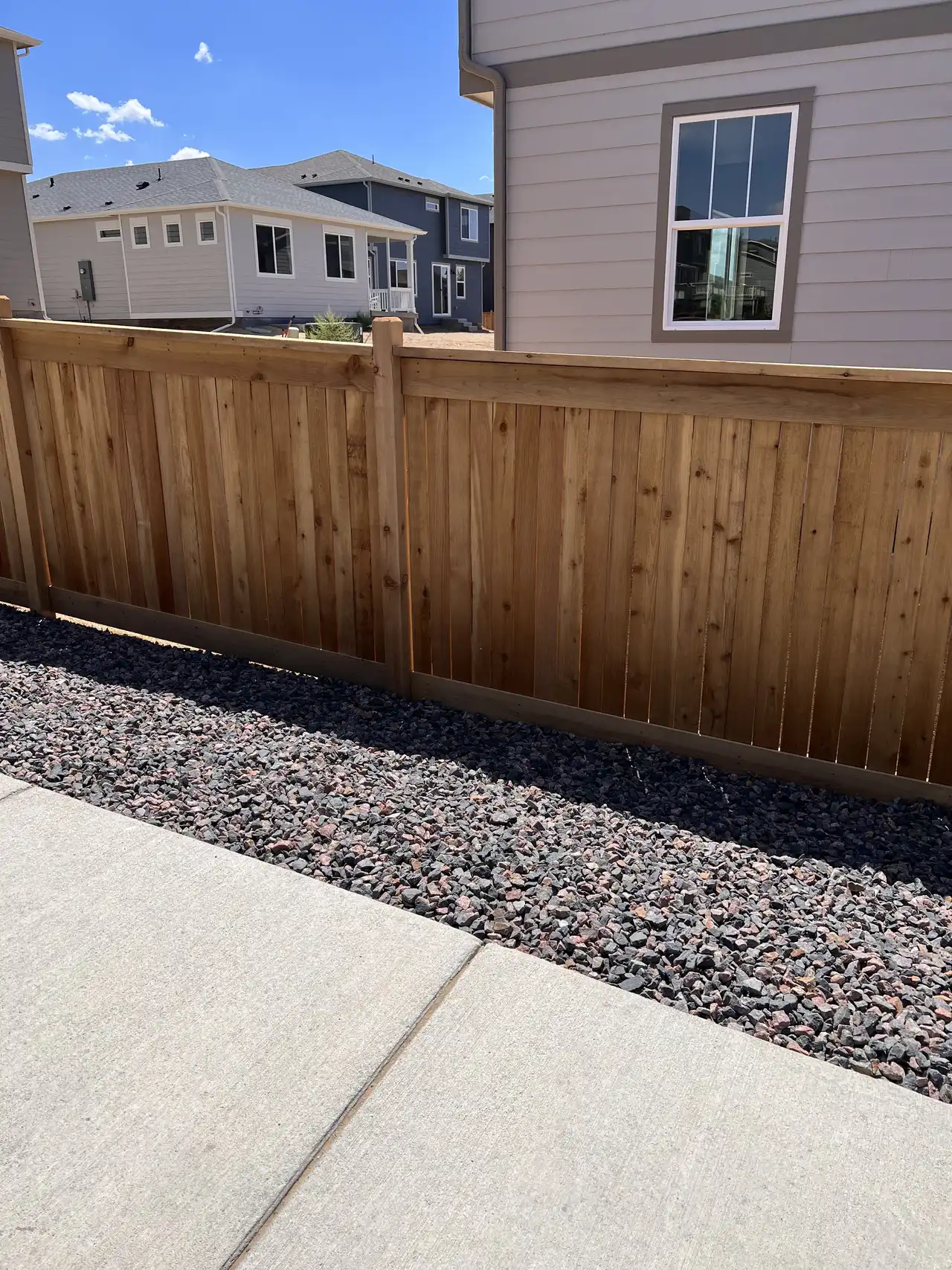
A fence on a shared line raises the same question sooner or later. It leans, a dog gets out, and two neighbors look at each other.
We build fences and we do not practice law. Below is the Colorado law we can point to by name, and where to look when the law does not answer the question. It is general information, not legal advice.
Which side of the fence belongs to the owner?
The common belief is that the owner gets the side with the posts and rails, and the neighbor gets the smooth side. That is a custom. We cannot point to a Colorado statute that makes it a rule.
The way the pickets face shows who the builder was being polite to. It does not show who paid, who owns the fence or where the line runs.
Some HOAs and city codes do say which way the finished side must face. That is a design rule, so read your covenants and your city's fence page before you build.
So who pays for a fence between two homes?
With no statute to settle it, payment comes down to agreement. Many neighbors split a shared fence, and nothing we can cite forces either of them to.
If you want a neighbor to share the cost, ask before the work starts and put the answer in writing. A short note that names the fence, the price and each share prevents most arguments.
If the neighbor says no, you may still be able to build on your own side of the line at your own cost, within your city and HOA rules. Then the choices and the upkeep are yours.
Covenants can change all of this. An HOA may keep perimeter fences for itself or set a cost rule of its own.
What if an old fence is off the property line?
This is where a fence question becomes a land question. Colorado's adverse possession statute, C.R.S. 38-41-101, can decide who owns a strip of land behind an old fence, and it has conditions only a court can weigh.
Whether that applies to a strip behind an old fence depends on facts a fence company cannot judge. Talk to a real estate attorney before you move, remove or rebuild a fence that sits off the surveyed line.
Order a survey first. Stakes in the ground give you and your neighbor the same facts to talk about.
What do cities and HOAs add?
Ownership and permission are separate questions. A fence that is clearly yours still has to meet local rules when it is replaced.
Highlands Ranch is the clearest example. The HRCA Residential Improvement Guidelines require approval for every new fence and any replacement with new material, and can require it for 25% or more.
Permits vary by place. Arapahoe County's Land Development Code requires a permit for every fence in the unincorporated county, and the Town of Parker requires one only over 6 feet.
Two neighbors who agree on everything still need that sign off. Check before either of you pays for materials.