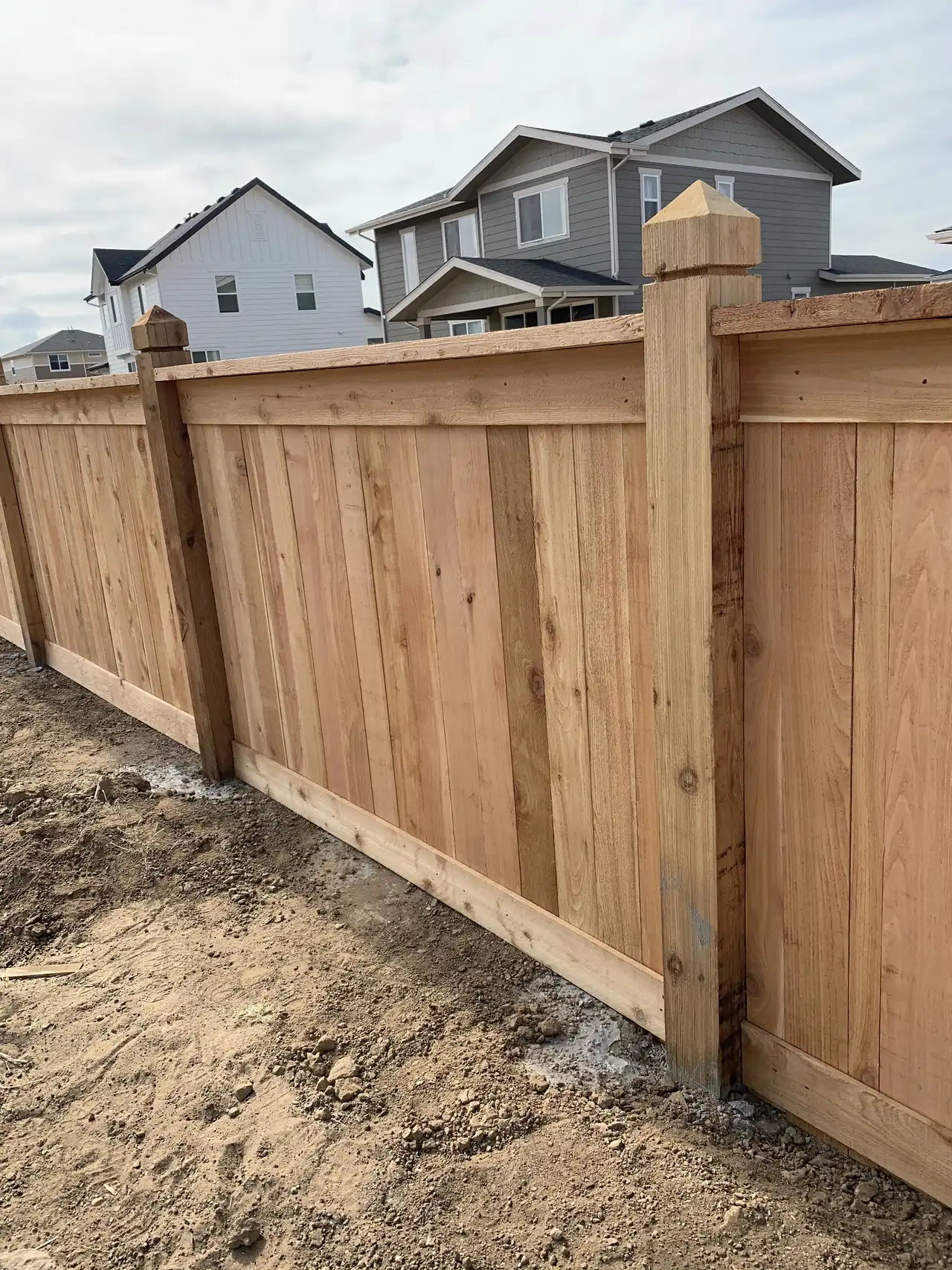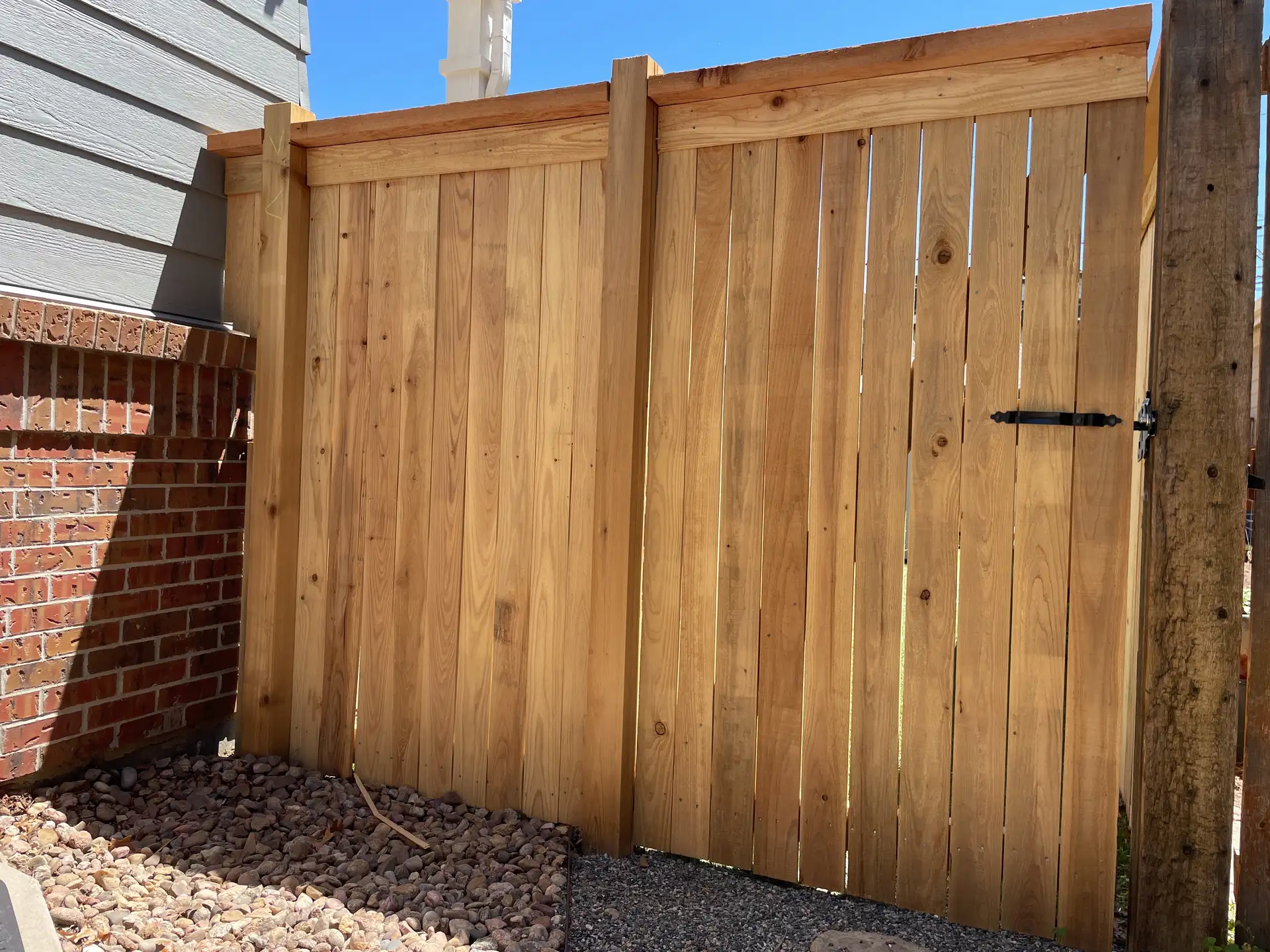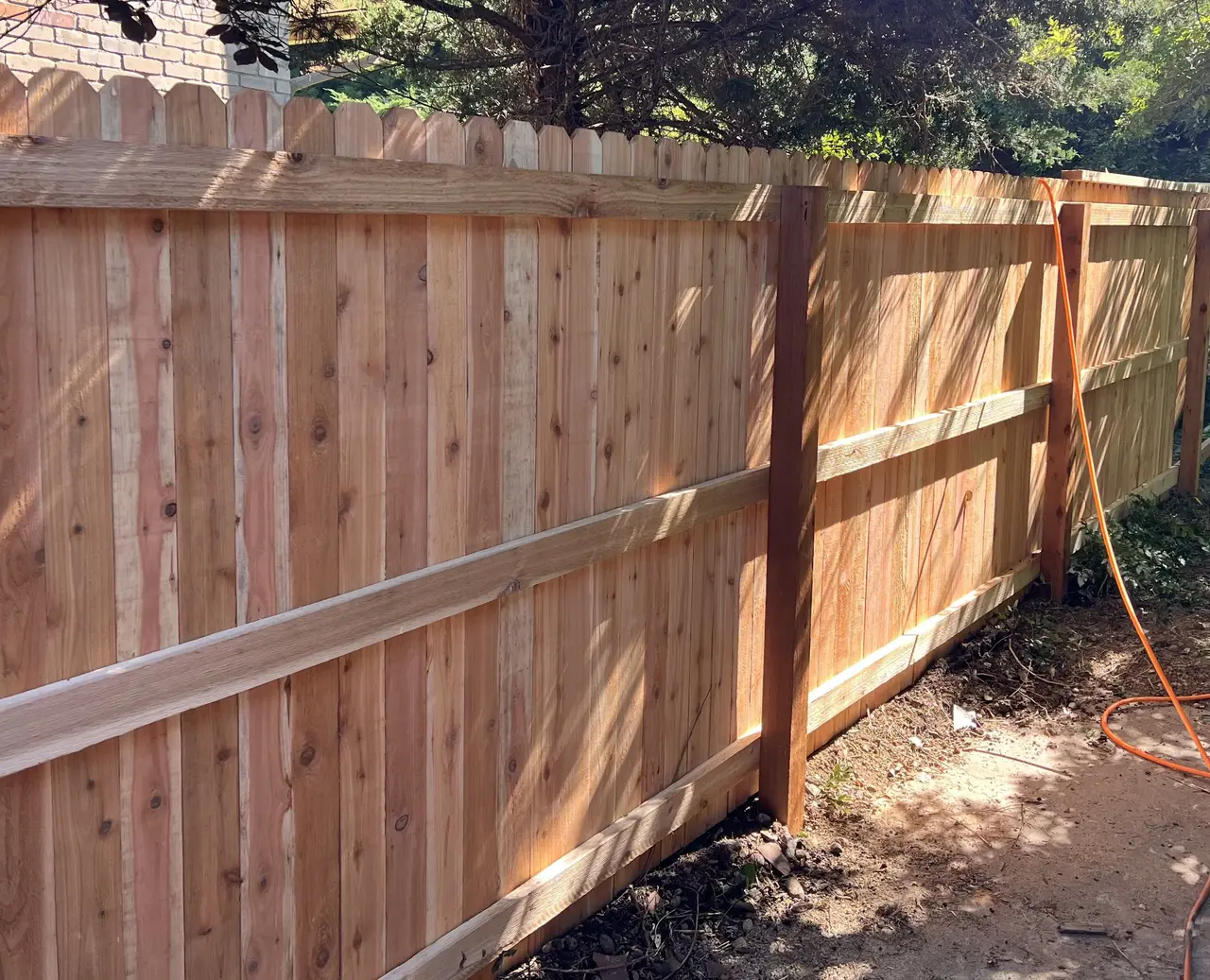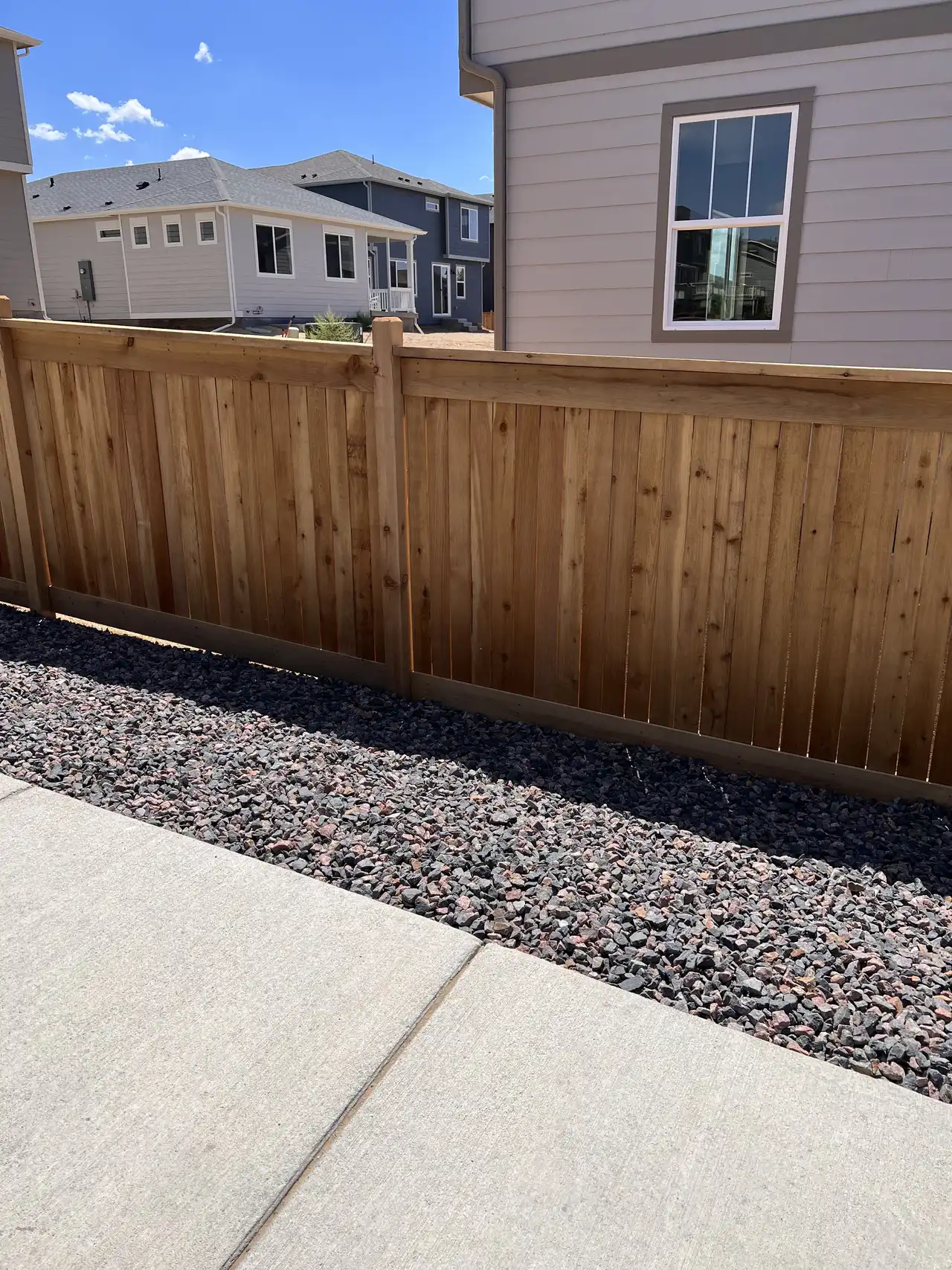
A fence looks simple from the street. Up close, the decision rarely is. Homeowners comparing vinyl and wood are balancing appearance, upkeep and how long the fence should serve the property before it becomes a project again.
The goal changes the answer. Backyard privacy, security for pets, a cleaner front yard or new panels after Colorado weather can each point to a different material. The right choice is not always the one with the lowest starting price.
What is the biggest difference between a vinyl fence and a wood fence?
It is what you sign up for after installation. Vinyl is built for lower maintenance. Wood offers more natural character and design flexibility, and it asks for more attention over time.
For many owners that is the whole conversation. The better material depends on how you use the space and how involved you want to be in upkeep.
Which looks better, vinyl or wood?
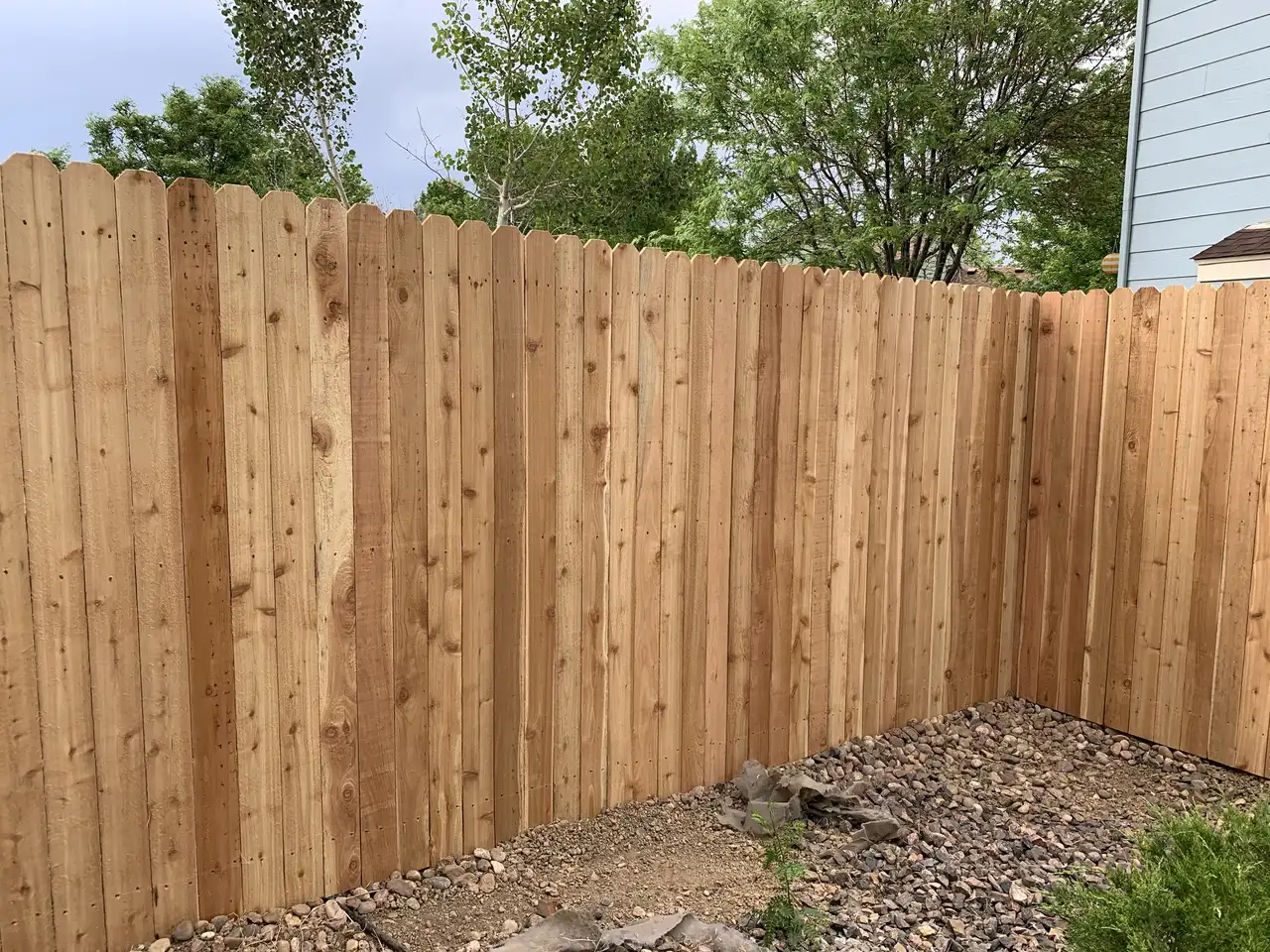
Wood has a look vinyl cannot fully copy. Cedar, warm stains, board on board layouts and horizontal designs give it a custom feel. It can read as traditional, modern, rustic or upscale.
Vinyl looks cleaner and more uniform, with no knots or color variation. On the right property it looks crisp, especially in white, tan or privacy panel styles.
HOA rules can settle the question. They may limit height, color, material or style. Wood often has more room to match an existing streetscape, and some HOAs prefer the uniformity of vinyl, so confirm what is allowed first.
How does maintenance compare?
Wood fences need maintenance. Staining, sealing, replacing damaged pickets and checking posts all extend the life of the fence. Our rule of thumb is to stain every 2 to 3 years.
In the Denver climate, sun, moisture swings and seasonal storms speed up wear. A wood fence holds up well for owners who stay ahead of weathering.
Vinyl is simpler. It needs no staining or painting, and care is usually limited to occasional cleaning. Low maintenance does not mean none, because vinyl still gets dirty and damaged sections still need repair.
How do the costs compare upfront and over time?
Wood is often less expensive upfront, especially for standard privacy styles. Over time it may need staining, repairs and new components. Those costs are not high every year, but expect them.
Vinyl usually costs more at the beginning. The trade off is fewer maintenance costs and a longer stretch of consistent appearance.
Value depends on how long you plan to keep the property. If you may move soon and want curb appeal without a major upfront spend, wood can make sense. For a longer stay, vinyl may give better value across the life of the fence.
A good estimate looks past material price. It factors in layout, slope, gates, privacy level, custom features and how the fence will perform on your lot.
Which is more durable in daily use?
Both perform well when installed properly, but they fail differently. Wood is structurally strong and simple to repair. One damaged picket can often be replaced without rebuilding a section.
Vinyl resists rot and insect damage and does not absorb moisture the way wood does. If it is hit hard, it can crack, and the repair may mean replacing a larger section or matching specific parts.
Installation matters as much as material. Posts, footing depth, rail support and gate construction decide whether the fence stays straight and secure. Regal sets fence posts 24 to 36 inches deep.
Which is better for privacy and security?
For backyard privacy, both do very well. Solid panel vinyl makes a clean barrier with minimal gaps. Wood does the same, with options like board on board for a more layered look.
Security depends less on the material and more on fence height, gate hardware and build quality. For families with dogs or young children, the real problems to avoid are gaps at the bottom, weak gates and leaning sections.
Which is easier to repair or change later?
Wood is usually easier to modify. You can extend the fence, swap sections, change the stain color or repair isolated damage.
Vinyl is less forgiving when styles change. Matching older panels or exact shades can be difficult, depending on the product line. Many owners never need to, because the original look stays consistent.
Where does composite fit?
Composite is the third option, and Regal Fencing installs it alongside wood and vinyl. It leans more upscale and contemporary and tends to come at a higher price point than either.
Consider it if you want lower maintenance and a distinct look. Ask to see samples of all three at your estimate.
So, should you choose vinyl or wood?
Choose vinyl if you want lower maintenance, a clean finished look and consistency over time. Choose wood if you care most about natural appearance, custom style options and easier changes later.
For Colorado properties, weather exposure belongs in the decision. The fence that suits one yard may be wrong for another because of sun, wind, grade and how the space is used.
At Regal Fencing we see this come down to lifestyle as much as looks. The best fence fits the property, the budget and the amount of maintenance you want to deal with. A free on site estimate from Jackson Vann comes with a written price, usually the same day.