Your dog will find the weakest corner of a fence long before you do. The best pet friendly fence ideas balance safety, visibility, durability and the way your yard gets used.
For some households that means full privacy and no gaps at all. For others it means keeping a small dog in without closing off the backyard. The right design starts with your pet's habits, not the style you like most.
What makes a fence truly pet friendly?
A pet friendly fence has to discourage jumping, prevent squeezing through and hold up to scratching and weather. It also has to suit the look of the property.
Height is the first concern, but rarely the only one. A four foot fence may be enough for a calm older dog. An athletic breed may need six feet and a layout with no launch points near gates, retaining walls or stacked stones. Denver, Littleton and Lakewood all cap side and rear fences at 6 feet in their city fence rules, so check your city before planning anything taller.
Visibility matters too. Some dogs are calmer behind a solid barrier. Others do better when they can see through the fence instead of reacting to every sound.
Which pet friendly fence ideas suit different yards?
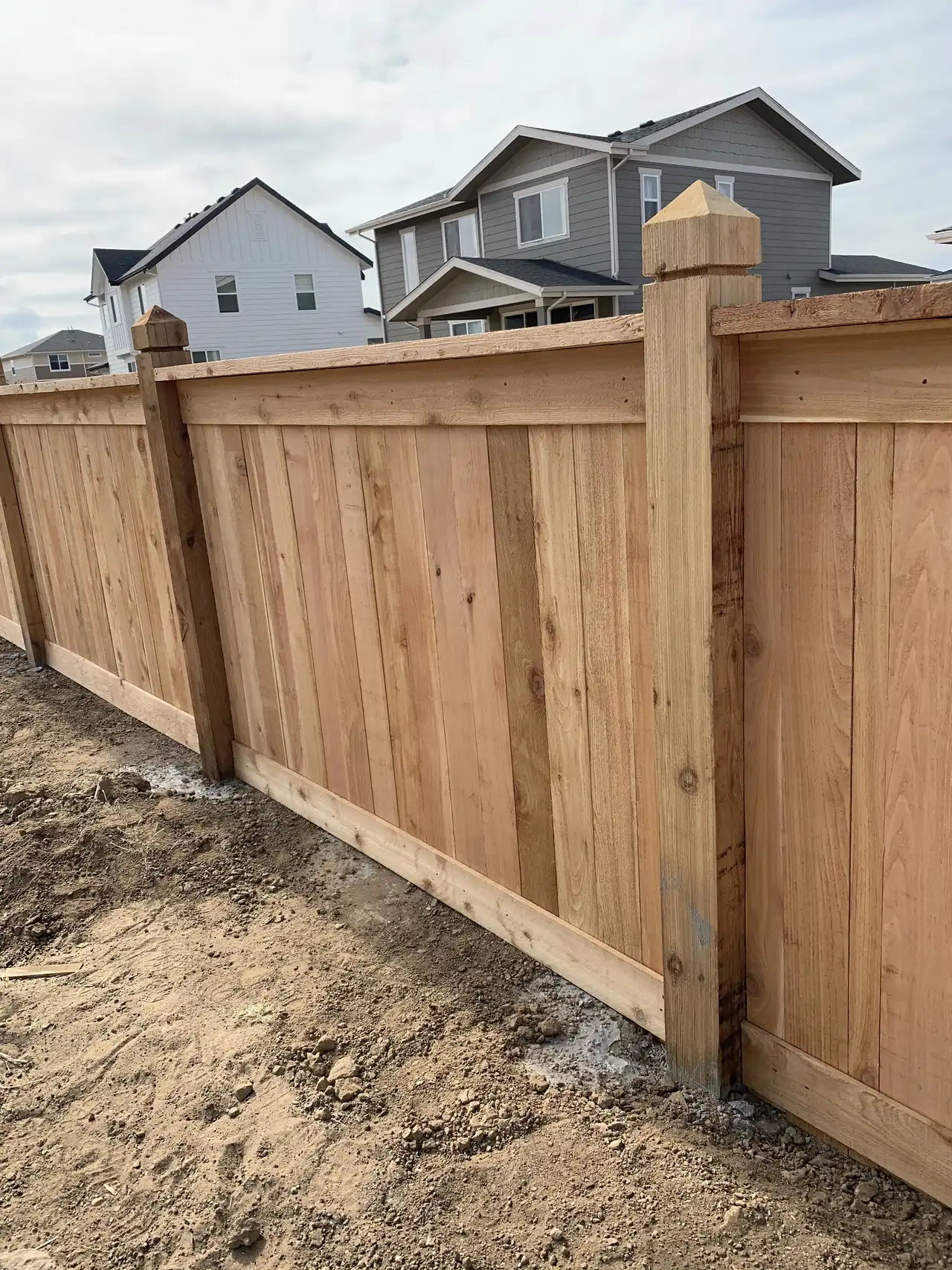
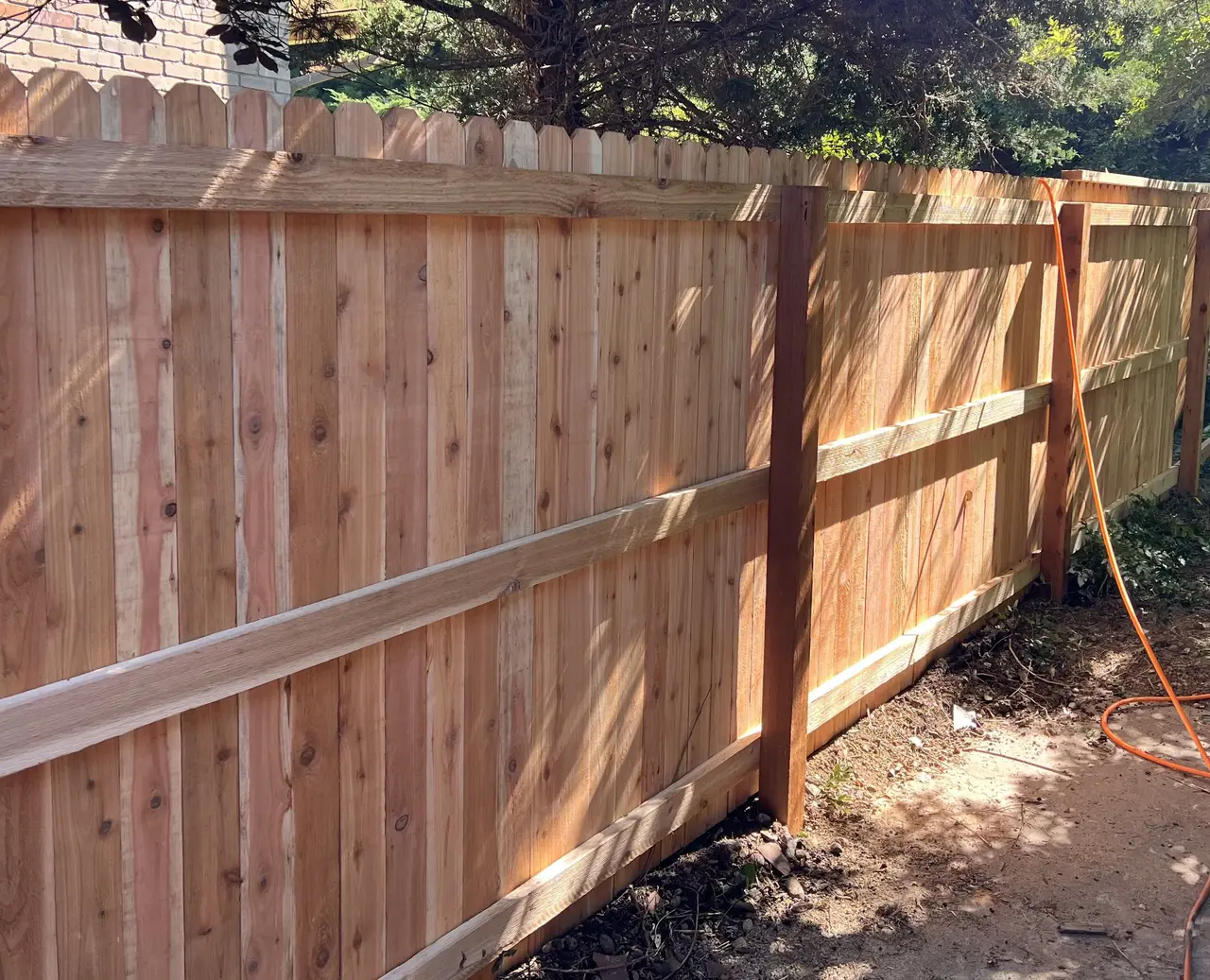
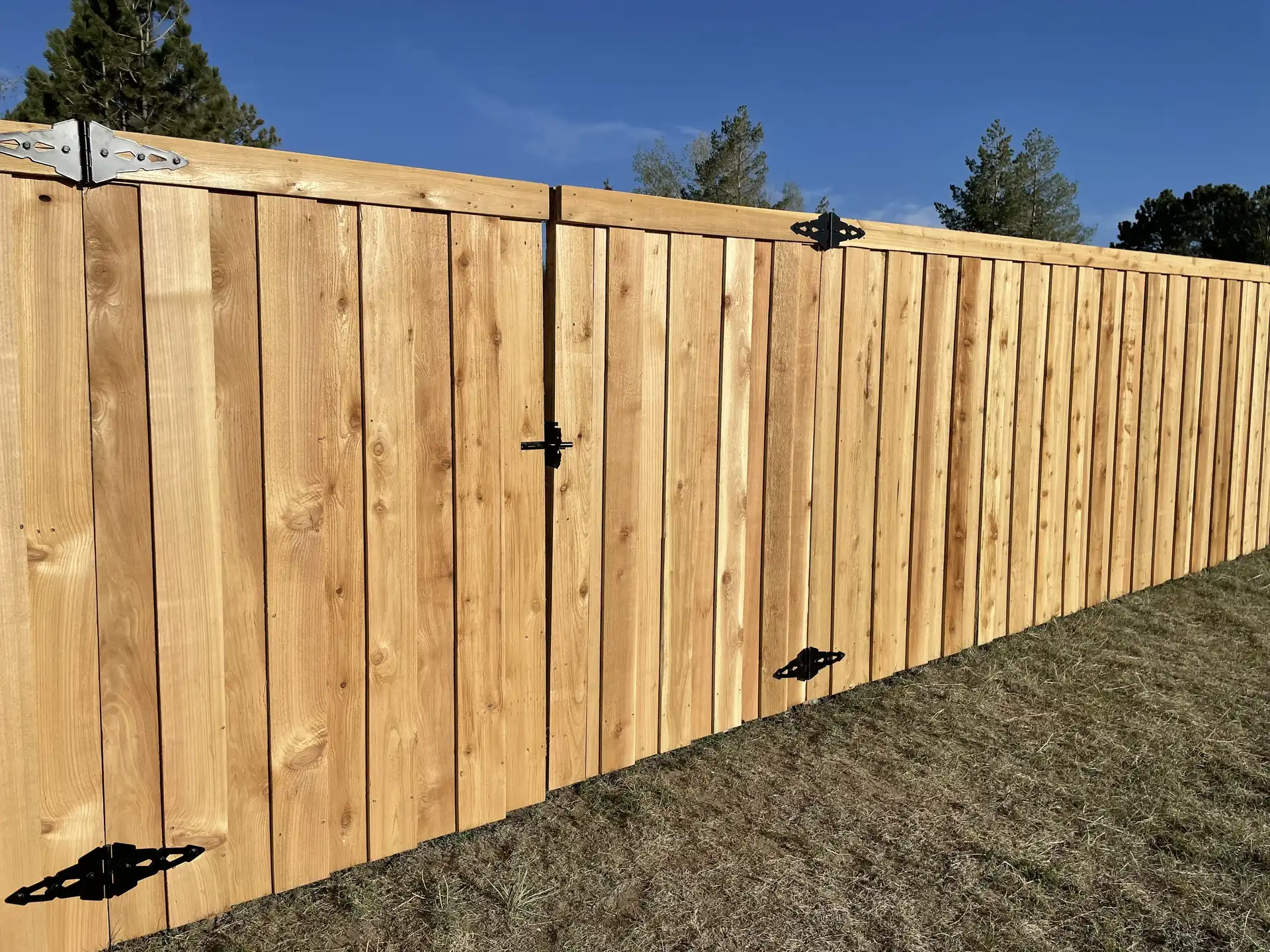
1. Board on board wood for privacy and fewer triggers: if your dog reacts to people, squirrels or other pets, the overlapping pickets limit sightlines and look finished from both sides. It works especially well where homes sit close together.
2. Horizontal wood with careful spacing: wide decorative gaps are not ideal for small dogs or escape artists. A custom horizontal design with tighter spacing and the right height keeps the modern look and the dog.
3. Vinyl privacy for low maintenance containment: it needs no staining and makes a consistent solid perimeter. Some panel styles sit with too much clearance at the bottom, so the installation has to account for grade changes.
4. Chain link for practical security: it is durable, cost effective and fully see through, which helps dogs that dislike feeling boxed in. It suits larger properties and side yards, and you can keep it to the less visible areas.
5. Chain link with privacy slats: this suits dogs that bark at every movement but still need a strong enclosure. It is not a full privacy fence and it looks more utilitarian than wood or vinyl.
Which details matter more than homeowners expect?
6. A consistent bottom line: small dogs squeeze through tight openings, and larger dogs start digging where they see daylight. On the sloped yards common in the Denver area, the fence has to follow the terrain so the bottom stays secure.
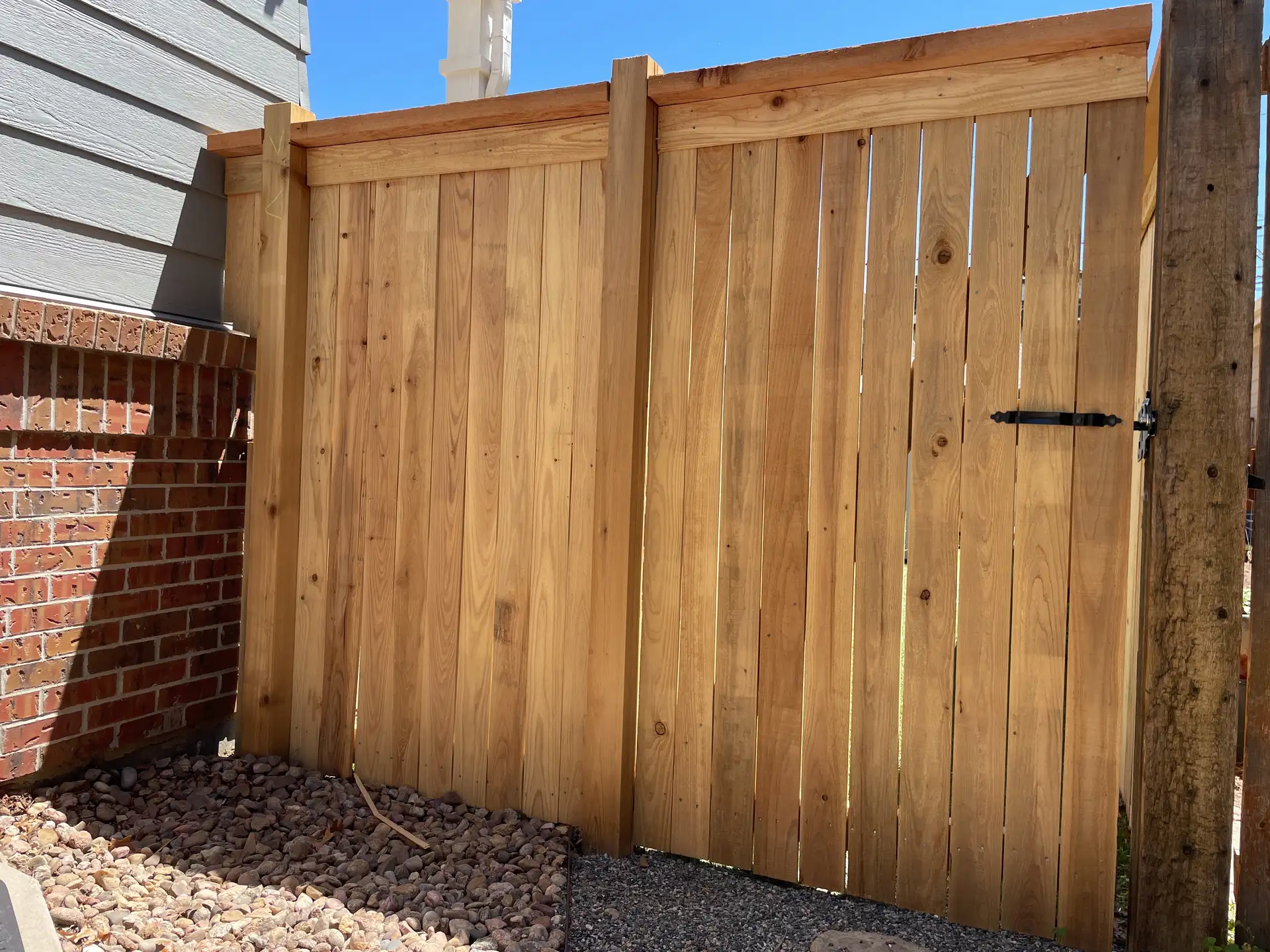
7. A solid gate: pets often find the weakest point first, and it is frequently the gate. Latches should be easy for people and hard for a dog to bump open, and the frame should be sturdy enough not to sag.
Check the space beneath the gate as well. It is a common escape route for smaller breeds.
8. Height matched to behavior, not breed size: medium size athletic dogs are often the bigger jump risk. For many homes six feet is the safe answer, and for climbers a style with fewer horizontal footholds helps more than extra height.
Which fence material fits your priorities?
If appearance and privacy lead, wood is hard to beat. It offers design flexibility and a natural finish, and it needs maintenance.
If low maintenance leads, look closely at vinyl. It stays clean and looks polished. Choose the right style and make sure the installation accounts for grade and pet size.
If budget and durability lead, chain link is still one of the most practical choices. It does not look like custom wood, but it performs well for active dogs and larger enclosures.
How do HOA or neighborhood rules affect a pet fence?
A fence can be perfect for your dog and still run into trouble with neighborhood standards. Height limits, approved materials and style requirements all affect what is possible.
That does not mean settling for a fence that only complies on paper. There is often room to meet the HOA rules and still protect pets well. Regal Fencing helps with HOA approval as part of the job.
When is custom fencing the better investment?
9. A custom layout: standard fences work fine for some properties. If you have a sloped lot, several pets, a small dog with escape talent or a strong style preference, custom design often makes more sense.
A custom approach solves uneven terrain, awkward transitions, visibility concerns and gate placement without forcing a one size fits all build.
Regal Fencing builds for homeowners with pets or children who want the fence done right. The build should feel solid on day one and still make sense a year later.
What does a smart pet fence protect?
The best fence for pets is not always the fanciest one. It is the one that fits your dog's behavior, your property layout and the level of maintenance you want to keep up with.
When those pieces line up, the fence does more than contain a pet. It makes the backyard easier to enjoy every day. Regal Fencing gives free on site estimates, and most installs take 1 to 2 days.