

Blog · 4 min read

How Deep Should Fence Posts Be in Colorado?

Regal Fencing Father-and-son fence company, Aurora, CO Published , updated
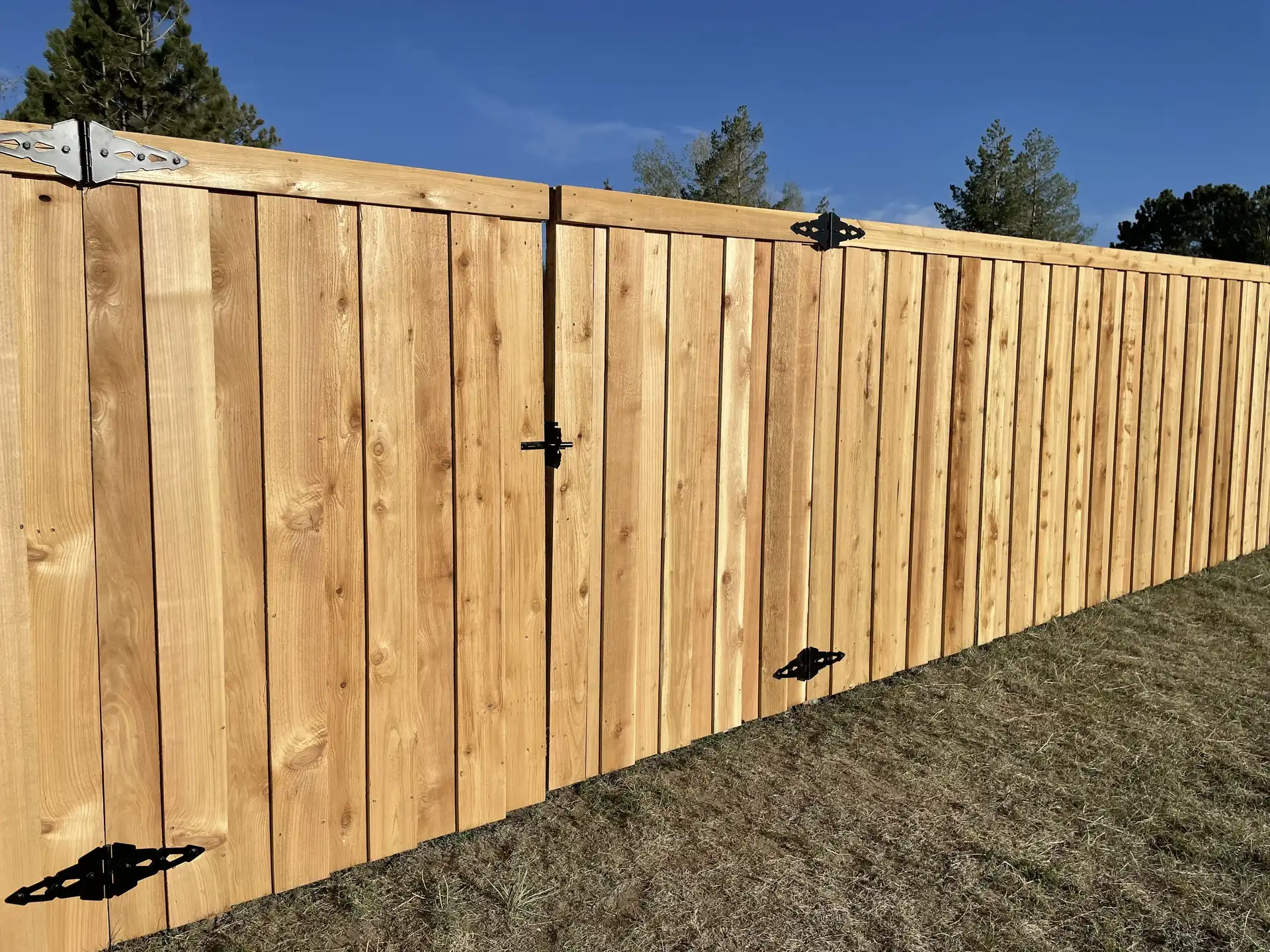
Long run of new cedar privacy fence with a flat top cap and a double drive gate with black T-hinges

Regal Fencing sets fence posts 24 to 36 inches deep. Height, wind exposure, gates and soil all change how deep a post should go. For reference, Aurora's Engineering Design Criteria and Douglas County's 2021 code amendments put frost depth at 36 inches, a figure written for footings and foundations.

Many leaning fences in Colorado share one cause. The posts were not deep enough for the ground they stand in.

The numbers to know are 24 and 36 inches. Regal sets posts in that range, and 36 inches is also the published frost depth in two south metro building codes.

What is the frost depth in the south Denver metro?

Frost depth is how far down a building code expects the ground to freeze in a hard winter. Aurora's Engineering Design Criteria set it at 36 inches. Douglas County's amendments to the 2021 International Residential Code use the same 36 inches.

The county figure applies in unincorporated Douglas County, which includes Highlands Ranch and Franktown.

Why these two sources? They are the two we could confirm in writing. We would sooner give you a number with a document behind it than a rule of thumb.

Other cities and counties publish their own number. If you live somewhere else, ask your building department for it before anyone digs.

Is 2 feet deep enough for fence posts?

It can be. 24 inches is the minimum post depth in the Boulder and Longmont fence guides, and it is the shallow end of the range Regal works in. A taller fence, a solid fence or a gate post puts more load on the post and calls for more depth, up to 36 inches.

The 2 foot habit comes from an old rule of thumb, which is to bury about a third of the post. That rule is about leverage, and leverage is why a taller fence needs more post in the ground.

A post too short for its fence can stand for a few seasons and still be wrong. The lean tends to show after a wet fall, a cold winter and a windy spring.
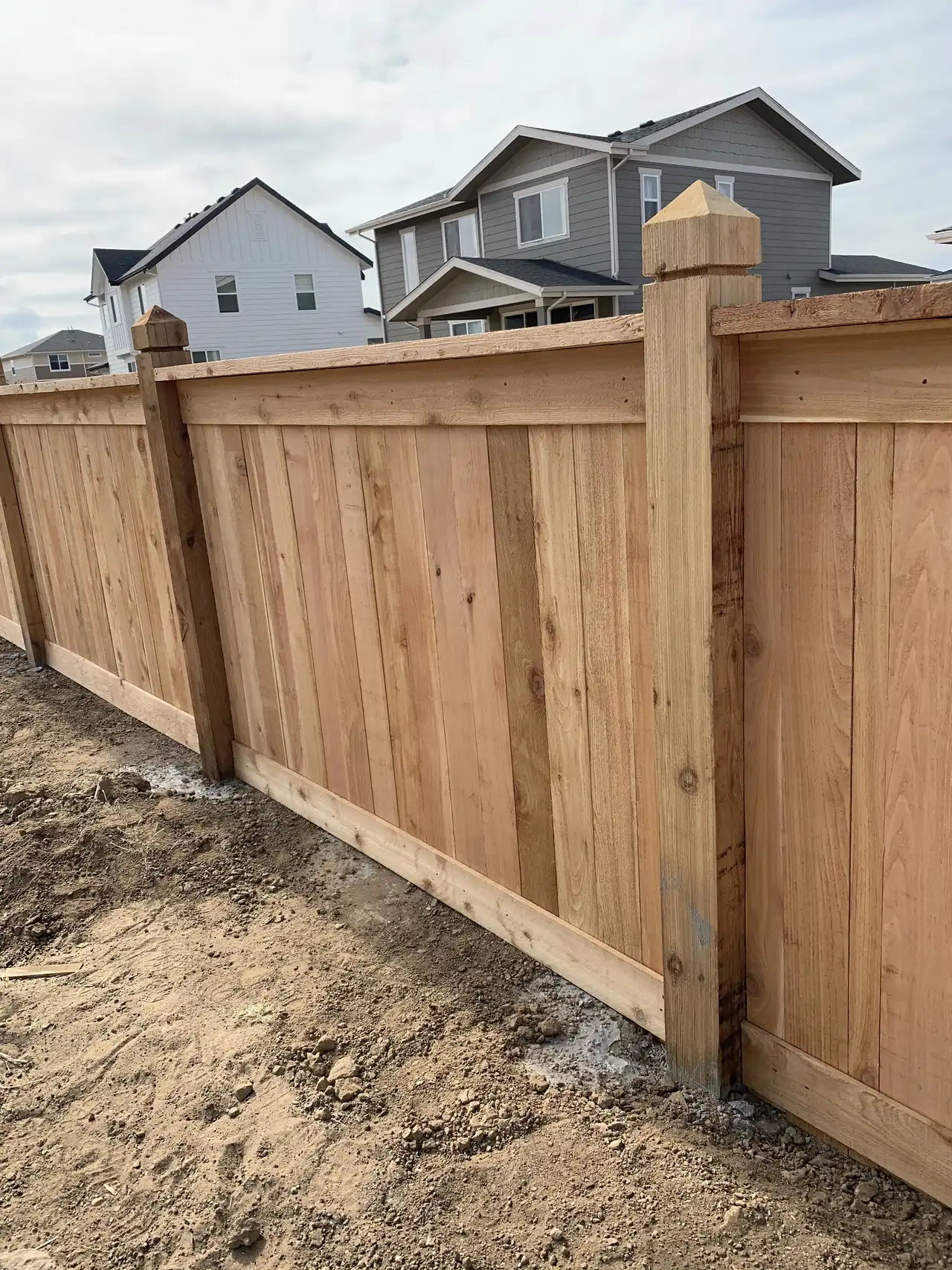
Cedar picture-frame privacy fence with pyramid-cut post tops on a new-build lot
Cedar picture-frame fence with pyramid-cut post tops on a new-build lot

How does frost move a fence post?

Wet soil expands as it freezes. Frozen ground can grip a post and its footing and lift them a little each winter.

The post rarely drops back to the same spot when the thaw comes. After several cycles it stands higher, looser and out of plumb. Depth is one defense. Footing shape and drainage are others, covered below.

Clay adds to the problem. The Colorado Geological Survey reports that half of the 30 sedimentary bedrock formations in the Front Range Urban Corridor contain swelling clay, and that those formations underlie all of the major cities. Swelling clay grows when it is wet and shrinks as it dries, so a shallow post gets pushed around in summer too.

Does the code require 36 inches for a fence?

Not in so many words. The 36 inch figure is a frost depth for footings and foundations, and neither document is written as a fence post rule.

In these two places, most backyard fences are never inspected either. Aurora's DIY Home Improvement Handbook requires a permit only for fences above 7 feet, and Douglas County requires one over 6 feet.

So on a standard 6 foot fence, nobody checks the holes except you and your contractor. That makes the depth in your written quote the number that counts.

Cross-section: a fence post set in a footing 24 to 36 inches deep, with the 36 inch code frost depth marked 36 in code frost depth 24 in Frost and swelling clay move this soil Regal posts: 24 to 36 in deep
Regal sets fence posts 24 to 36 inches deep. For reference, frost depth is 36 inches under Aurora's Engineering Design Criteria and Douglas County's 2021 code amendments, and frost and swelling clay both move the soil near the surface.

Should fence posts be set in concrete or dirt?

For a solid privacy fence, concrete is the common answer in this area. A concrete footing spreads wind load into the soil and holds the post plumb while the ground around it moves.

The shape of the footing matters as much as the mix. A footing that flares wide at the top gives frozen soil a lip to lift. A top that holds water keeps a wood post wet at ground level, which is where rot starts.

Lighter, open fences are a different case. Ask how the posts will be set for the style you are buying, and why.

Whatever the method, the bottom of the hole is what counts. Depth is measured to the base of the footing, not to the top of the concrete.

What else changes how deep a post should go?

Height comes first. A taller fence puts more leverage on each post, so an 8 foot fence needs more below ground than a 4 foot picket fence.

Wind is next. A 21 year study at the National Renewable Energy Laboratory's Flatirons Campus counted 1,172 downslope windstorms near Boulder, about 56 a year. A solid panel takes that wind like a sail and hands the load to the posts.

Gate posts carry the weight of the gate every time it swings, so they often need a deeper, wider footing than line posts. Slopes, loose fill and rock change the hole as well.

Post material matters too. Steel posts do not rot at ground level the way wood can, and you can ask about our free steel posts at the estimate.

What should you ask before the first hole is dug?

Ask how deep and how wide the holes will be, and ask to see the depth in writing. Ask what happens if the auger hits rock before it gets there.

Ask about utilities. Colorado law requires an 811 notice at least 2 business days before digging, and Colorado 811 asks for 3. Regal Fencing requests the locate on its installs.

Sprinkler lines are not part of that locate. Under our sprinkler line guarantee, any line we damage during install is fixed for free.

The estimate is free and on site. Jackson Vann looks at the yard, the slope and the old fence line, then gives a written price, usually the same day.
FAQ

What else do people ask?

5 questions, answered plainly

  1. How deep should fence posts be in Colorado?

    Regal sets fence posts 24 to 36 inches deep. Height, wind, gates and soil change how deep a given post should go. For reference, frost depth is 36 inches in Aurora's Engineering Design Criteria and Douglas County's 2021 code amendments, and other jurisdictions publish their own figure.

  2. Is 2 feet deep enough for fence posts?

    It can be. 24 inches is the minimum post depth in the Boulder and Longmont fence guides, and it is the shallow end of the 24 to 36 inch range Regal works in. Taller, solid and gate posts need more depth.

  3. Should fence posts be set in concrete or dirt?

    Concrete is the common choice for a solid privacy fence, because it spreads wind load and holds the post plumb. Lighter, open fences can be set differently, so ask how the posts will be set for your style.

  4. Do I need a permit for a backyard fence?

    It depends on the city and the height. Aurora's DIY Home Improvement Handbook requires a permit only above 7 feet, and Douglas County requires one over 6 feet. Centennial and Littleton require a permit for every new fence.

  5. Do post holes need an 811 locate?

    Yes. Colorado law requires notice at least 2 business days before digging, and Colorado 811 asks for 3. Regal Fencing requests the locate on its installs.

Keep reading

  • Cedar picture-frame privacy fence with pyramid-cut post tops on a new-build lot

    November 13, 2026

    Can You Install a Fence in Winter in Colorado?

    36 inches is the frost depth in the Aurora and Douglas County codes, and it is a design figure, not a winter ban. See what decides if a fence can go in now.

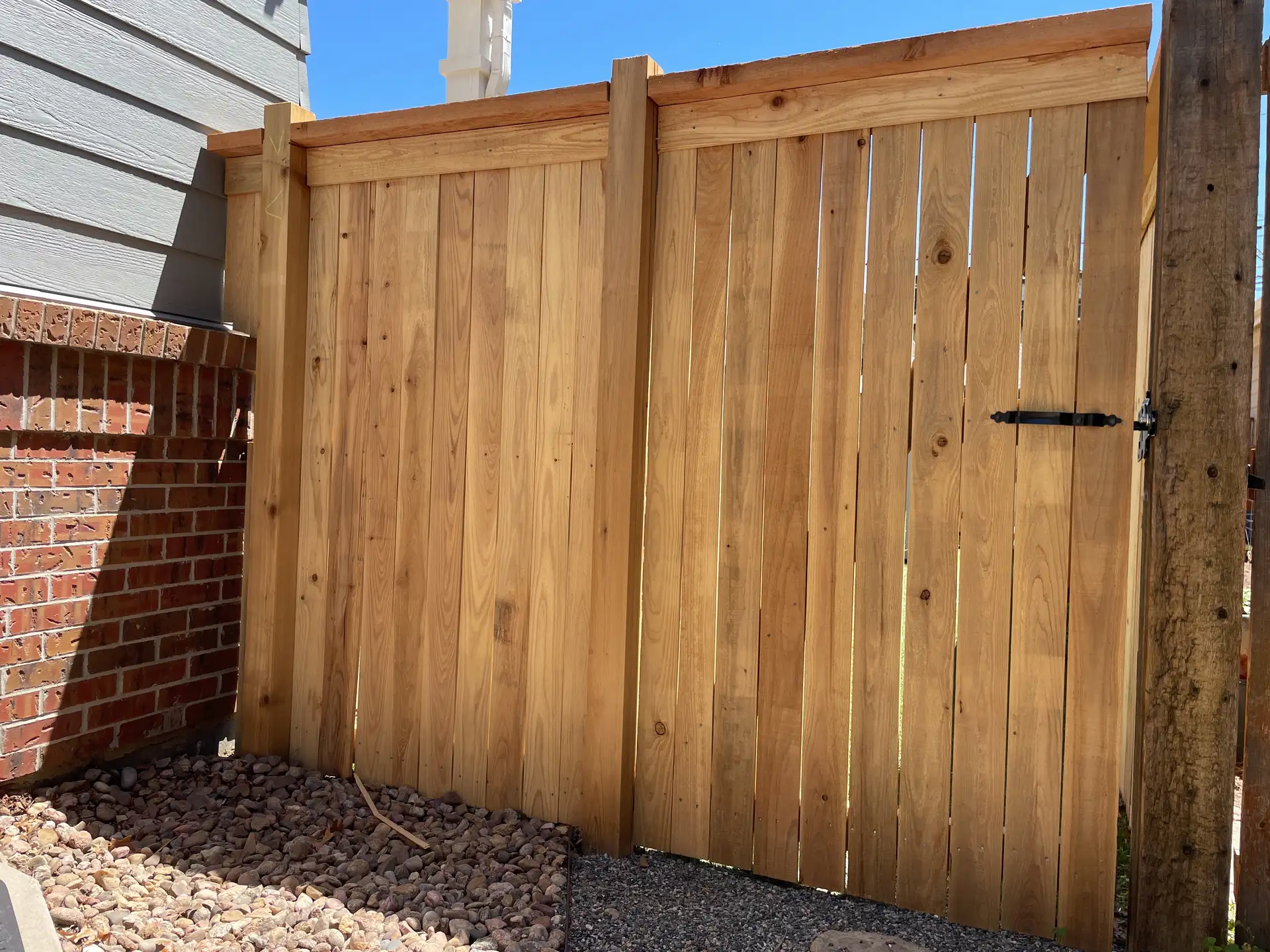
  • New cedar cap and trim privacy fence with a wide wood gate, black strap hinges and a drop latch

    November 10, 2026

    Colorado 811: What to Do Before You Build a Fence

    2 business days of notice is the law in Colorado, and Colorado 811 asks for 3. See what gets marked before a fence goes in and how our sprinkler line guarantee works.

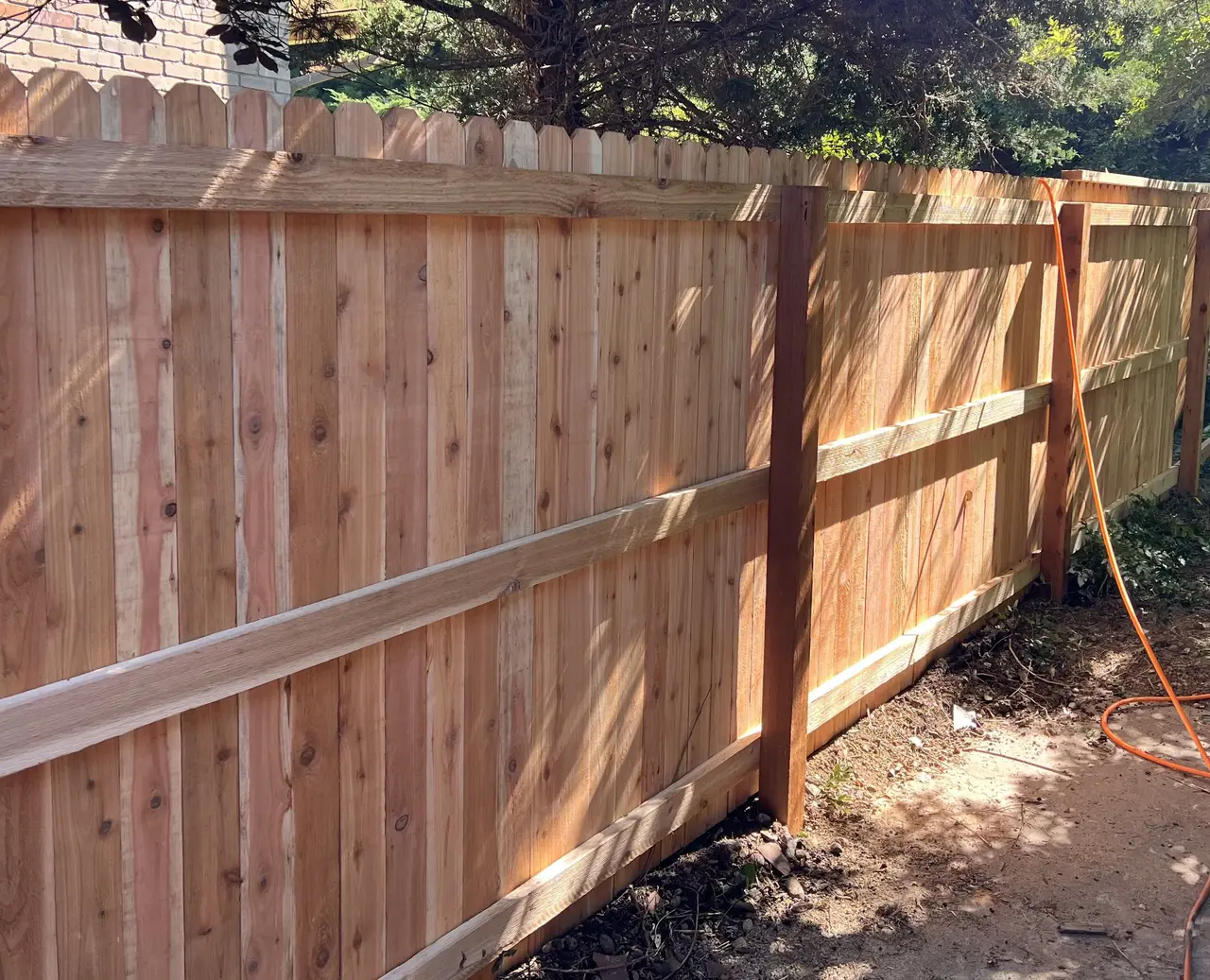
  • Rail side of a new cedar dog-ear fence mid-install, showing three rails and post spacing

    November 8, 2026

    Is It Cheaper to Repair or Replace a Fence?

    1 or 2 damaged sections with solid posts is a repair. Posts failing along the whole line point to replacement. A 10 minute check tells you which fence you have.

Testimonials

What do customers say about Regal Fencing?

4.5 stars from 93 Google reviews. Quoted exactly as written.

  • I can’t recommend Regal fencing more. The entire process was smooth and James communicated with me the whole time. My new fence looks amazing. Thank you!

    Samantha P.Google review,
  • called 20 companies no one wanted to come due to this being a small project. This company gave us a quote and they did an excellent job. We will be replacing our entire fence with them soon. great work fair price and all around professionals

    Ulises A.Google review,
  • ... the crew was great to work with. Super conscientious communications. ... Theirs was a fair, reasonable price. Good quality wood and good attention to design, and good quality, solid construction.

    Sam B.Google review,
  • We went back with the metal posts instead of 4x4 cedar posts. The crew showed up on time with all the materials needed for the job. No running back and forth to Home Depot. ... The clean up is worth talking about, they swept the sidewalk and even the street.

    Tim D.Google review,
  • They were very clear in their communication, including helping me find solutions to unexpected findings when repairing my deck without increasing cost. The work they did on fence and deck was professional and solid. Everything feels much safer now.

    Frank R.Google review,

Read more reviews