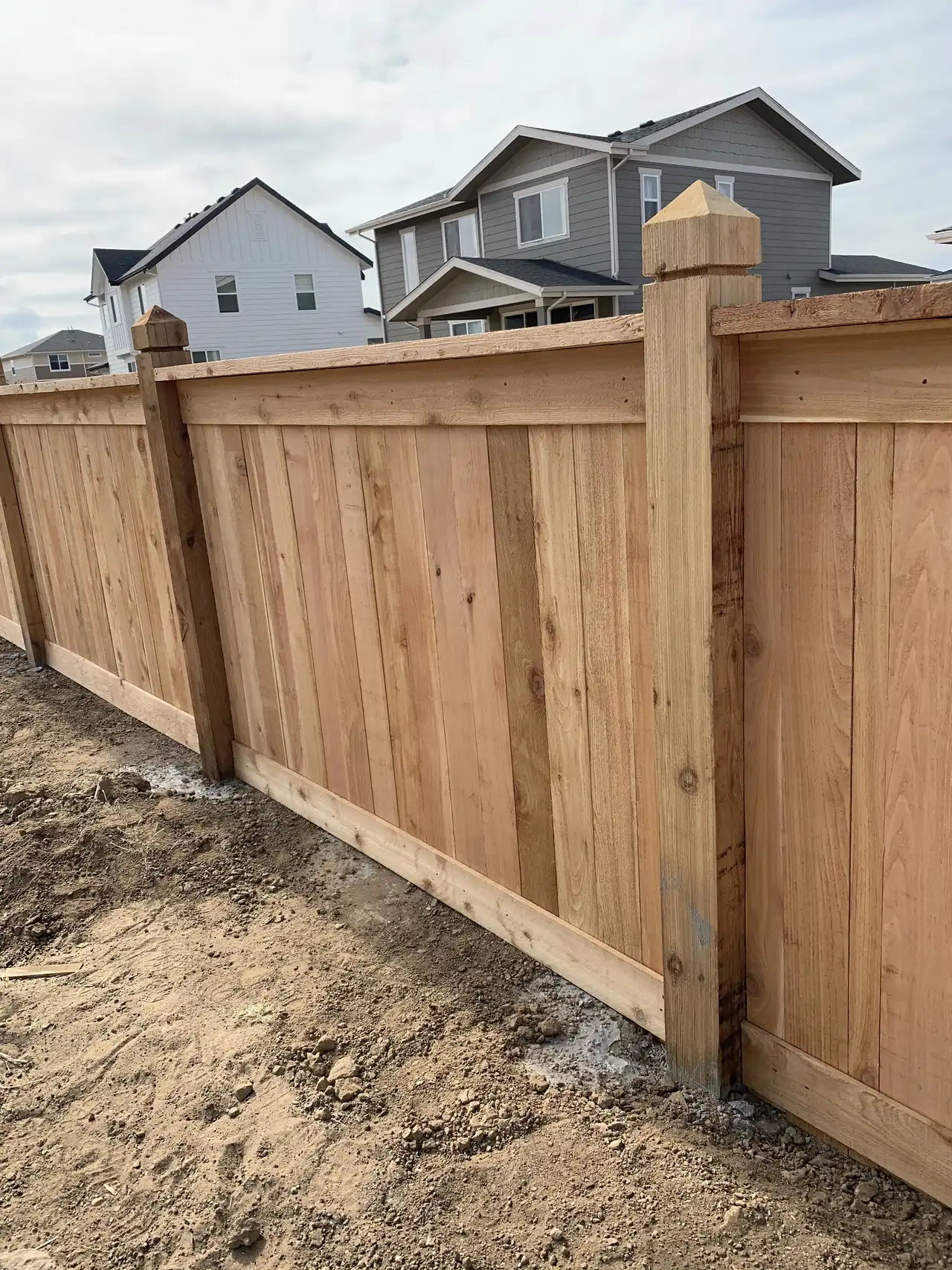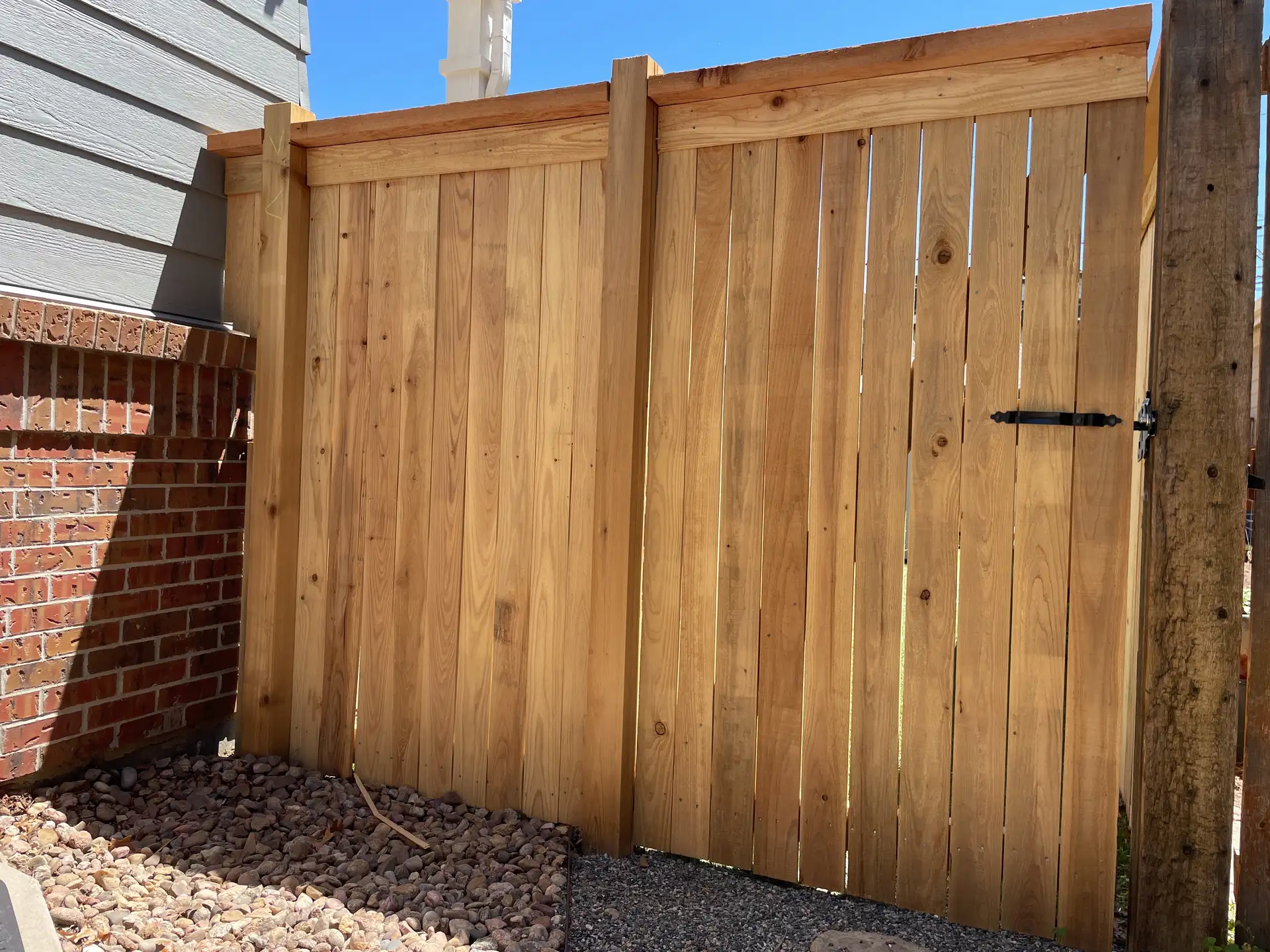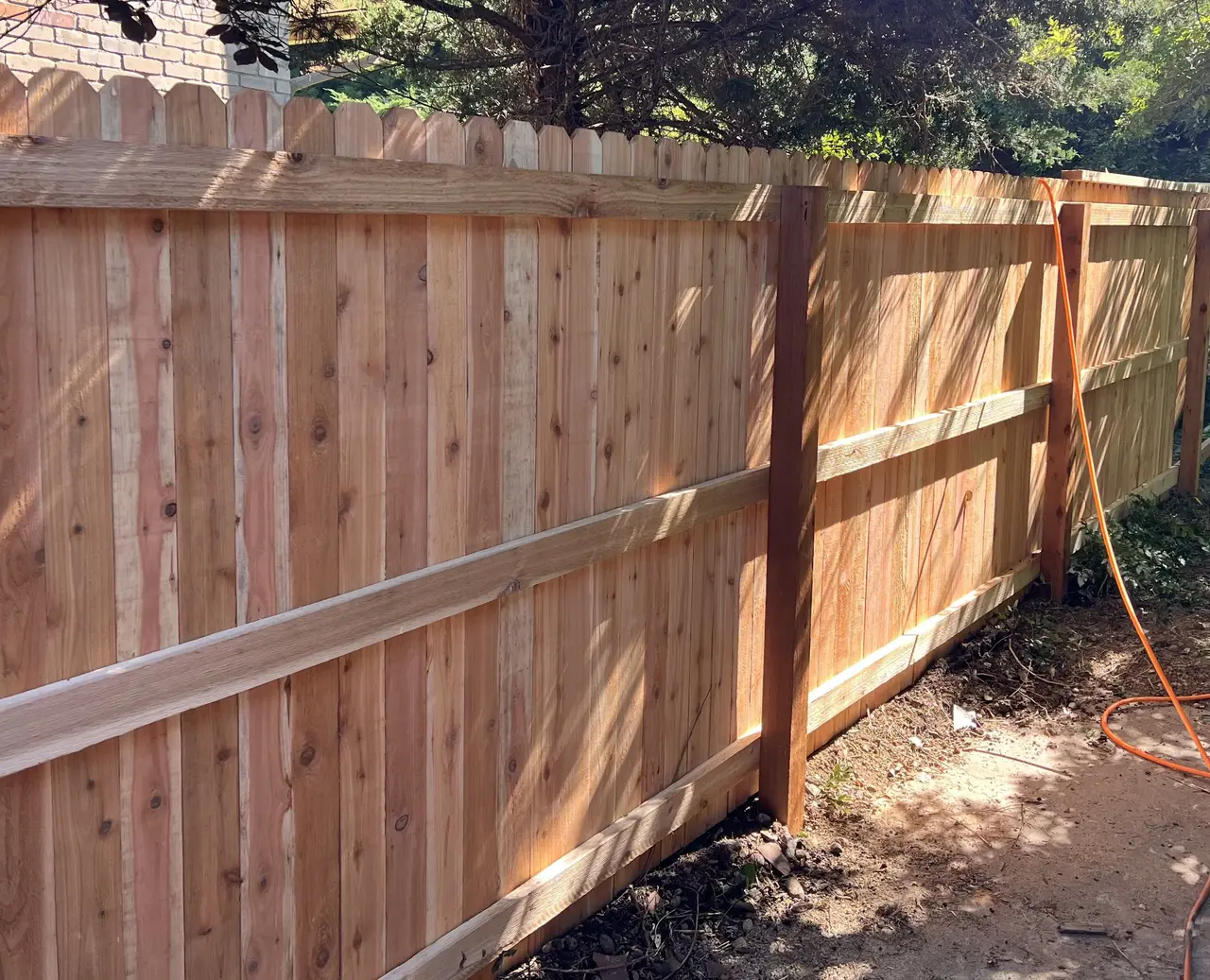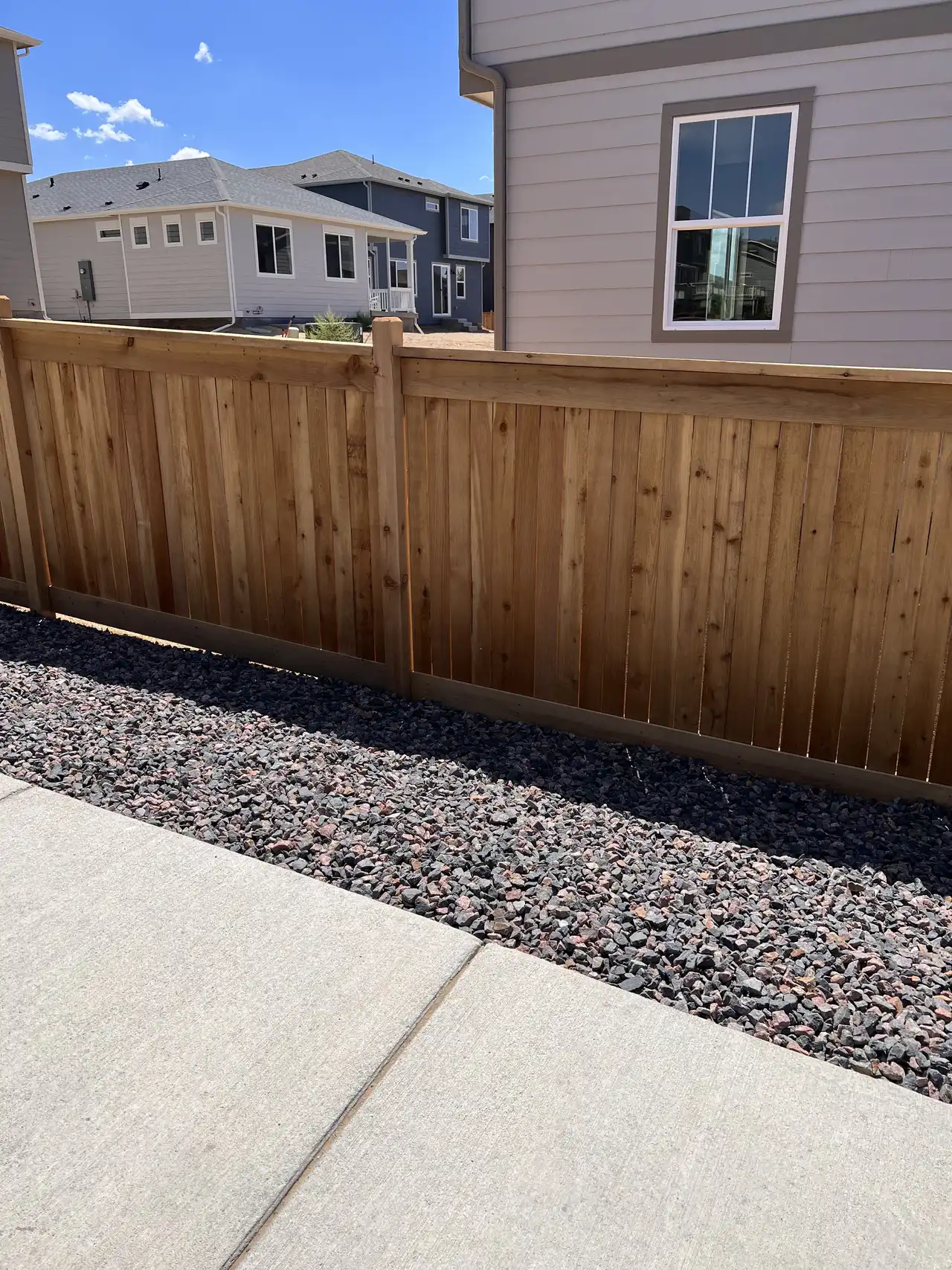
A side by side privacy fence starts out tight, then the boards dry out, the wind works on them and gaps start to show. That is why homeowners comparing wood privacy styles look at board on board early.
A board on board fence uses overlapping pickets instead of placing each board edge to edge. That overlap is the key detail. It gives a fuller look, better privacy and room for the natural movement wood goes through as the weather changes.
Why do board on board fence benefits stand out?
The biggest advantage is privacy that holds up over time. Standard side by side wood fences can develop visible gaps as the wood dries and shrinks. With overlap, the fence still blocks the direct line of sight when the boards move.
There is a visual benefit too. The layered pattern creates shadow lines and texture, so the fence has more depth than a flat privacy fence. It reads as clean, classic and substantial.
How does board on board keep privacy longer?
Privacy is usually the first reason people consider this style. The overlapping boards cut visibility from both sides, which makes the yard feel more enclosed and comfortable.
That matters for homes with patios, hot tubs, play areas or small yards where neighboring windows sit close. It also matters if you back onto an alley or a shared greenbelt.
Privacy still depends on the whole design. Height, board width, rail placement and the grade of the yard all affect the result, so the layout should be fitted to the property.
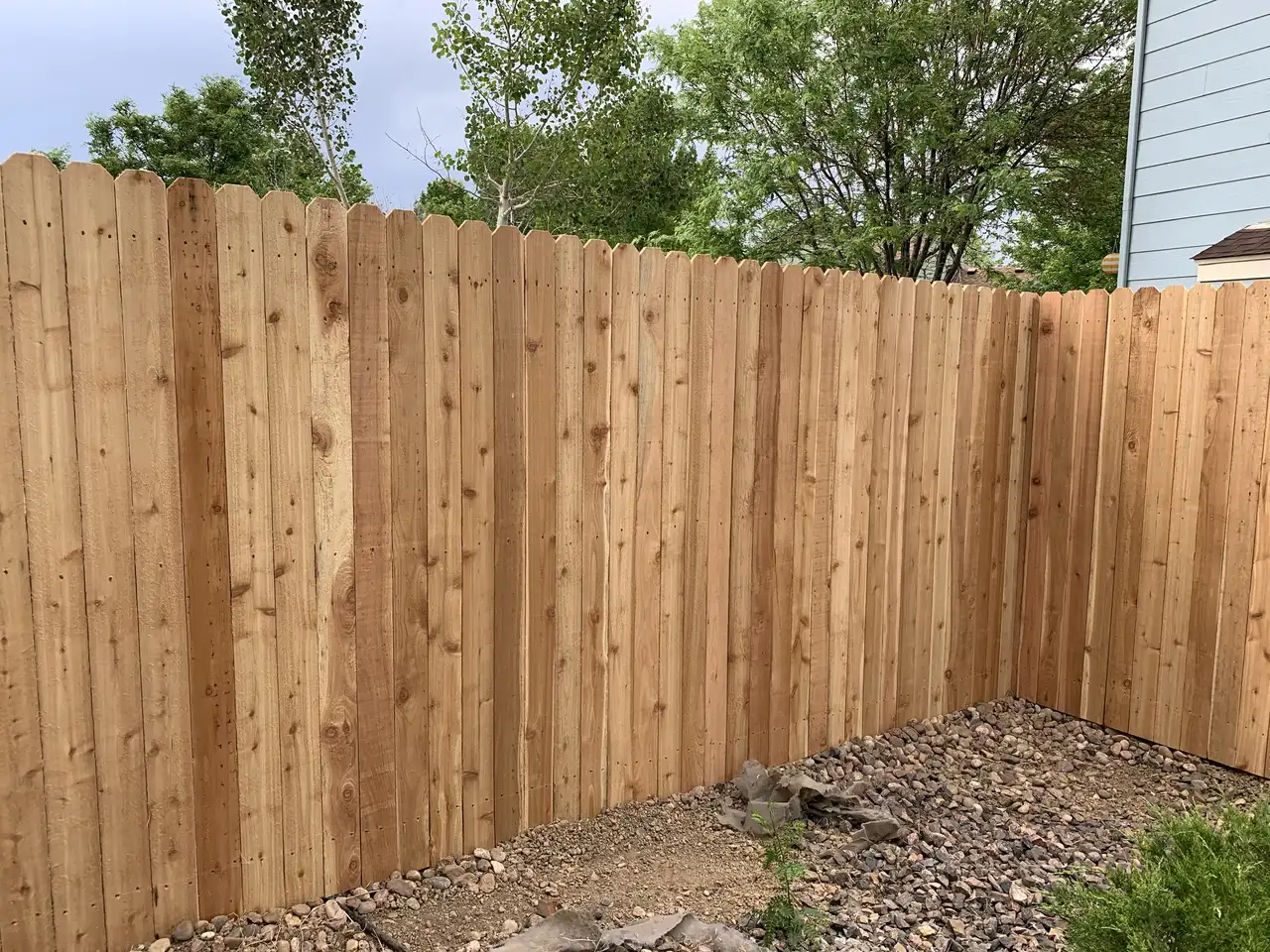
Does it perform better as wood moves?
Wood expands and contracts with moisture and temperature. In a dry climate with strong sun, that movement shows more over time.
A standard privacy fence can start out tight and reveal narrow gaps later. Board on board offsets that because one board overlaps the next, so coverage stays consistent after the first season.
Is a board on board fence stronger?
It looks heavier and more finished than simpler wood layouts. The fence feels intentional, not temporary.
The pattern does not replace solid construction. Strength still comes from post spacing, rail attachment, lumber quality and how the fence is installed. On lots exposed to wind, careful construction matters as much as style.
- Flat top
- Dog ear
- Board on board
- Spaced picket
- Horizontal
- Cap and trim
- Lattice top
Does it add curb appeal?
Yes. The overlapping boards create dimension, and the fence looks more custom than a basic privacy panel.
That counts most when the fence is part of a bigger backyard project, such as new landscaping or replacing an aging fence. You are paying for enclosure and for a fence that adds to the look of the home.
Is it a good fit for custom design goals?
Board on board is flexible. You can adjust height, top profile, post caps, gate design, stain color and trim to suit the property. It works with a traditional warm stain and with a cleaner finish on a newer home.
It can also suit HOA neighborhoods because it looks classic and well kept. Rules vary, so confirm the design standards before installation begins. Regal Fencing helps with HOA approval.
What are the trade offs?
Overlapping boards take more material than a side by side design, and that raises the cost. Installation is more detailed too. Spacing, alignment and finish take care, and small mistakes show.
There is maintenance to plan for. Like most wood fences, board on board benefits from regular staining or sealing to protect against moisture and sun. If you love the look of wood but want very low maintenance, another material may fit better.
Many homeowners still decide the added cost is worth it. The fence gives more privacy, a stronger presence and a better appearance over the long run than simpler wood styles.
When does a board on board fence make the most sense?
It is a smart choice when privacy is the top priority, when homes sit close together, or when the old fence failed because of gaps and wear. It also suits owners who want a wood fence that feels custom.
In the Denver area, sun, snow and dry air all work on wood. Choosing a style that allows for wood movement saves frustration later. That is one reason many owners pick board on board when they replace an older privacy fence.
Why does the builder matter as much as the style?
The best design falls short if the installation is rushed or the materials do not suit the job. Posts need to be set correctly, the layout has to be right, and gates need to swing and latch properly.
A good fence contractor helps you weigh appearance, budget, maintenance and site conditions before the first post goes in. At Regal Fencing that starts with a free on site estimate from Jackson Vann and a written price. Most of our installs take 1 to 2 days.