A fence around a commercial property has one job first: control access. Curb appeal and privacy come after that. So the choice is less about a style you like and more about the risks, traffic and daily demands of the site.
A retail center needs something different from a storage yard. Some properties need visibility for monitoring, and others need privacy, a fence that is hard to climb, or a clean look that still feels welcoming.
How do you evaluate commercial security fencing options?
Start with how the property works. Think about who needs access, what should be kept out and how much visibility you want from the street or parking area. A fence that suits a contractor yard may feel too harsh for a business that greets customers.
Height matters, but it is only one part of security. A six foot fence may be enough for some properties when it is paired with secure gates and good lighting. Taller fencing makes more sense for industrial sites or places with repeated trespassing, and tighter picket or mesh spacing makes climbing harder.
Gates are as important as the fence line. Many security problems happen at entry points, not along the perimeter. If the gate hardware is weak or the layout slows traffic, the fence will not solve the larger problem.
When is chain link the right commercial choice?
Chain link is one of the most common commercial choices. It is cost effective, durable and fast to install on large perimeters. It also keeps sightlines open for cameras, lighting and staff.
It often makes the most sense for warehouses, utility areas, storage lots, schools and service facilities. Open views leave fewer hiding spots and support site monitoring.
Not all chain link is equal. Commercial grade posts, heavier gauge wire and privacy slats change the level of protection. The trade off is appearance, so some businesses use chain link only on the less visible sides.
When does ornamental metal fencing make sense?
Ornamental metal is a strong option when a property needs a better look without giving up perimeter control. Aluminum and steel styles are common around offices, multifamily properties and community spaces.
It creates a clear boundary and looks professional on the street facing side. Spear top designs and closely spaced pickets make climbing more difficult.
Steel generally offers more strength, and aluminum offers lower maintenance and rust resistance. The main drawback is a higher upfront cost, especially on large sites. Ornamental metal also gives little privacy.
Where does wood fencing fit on a commercial site?
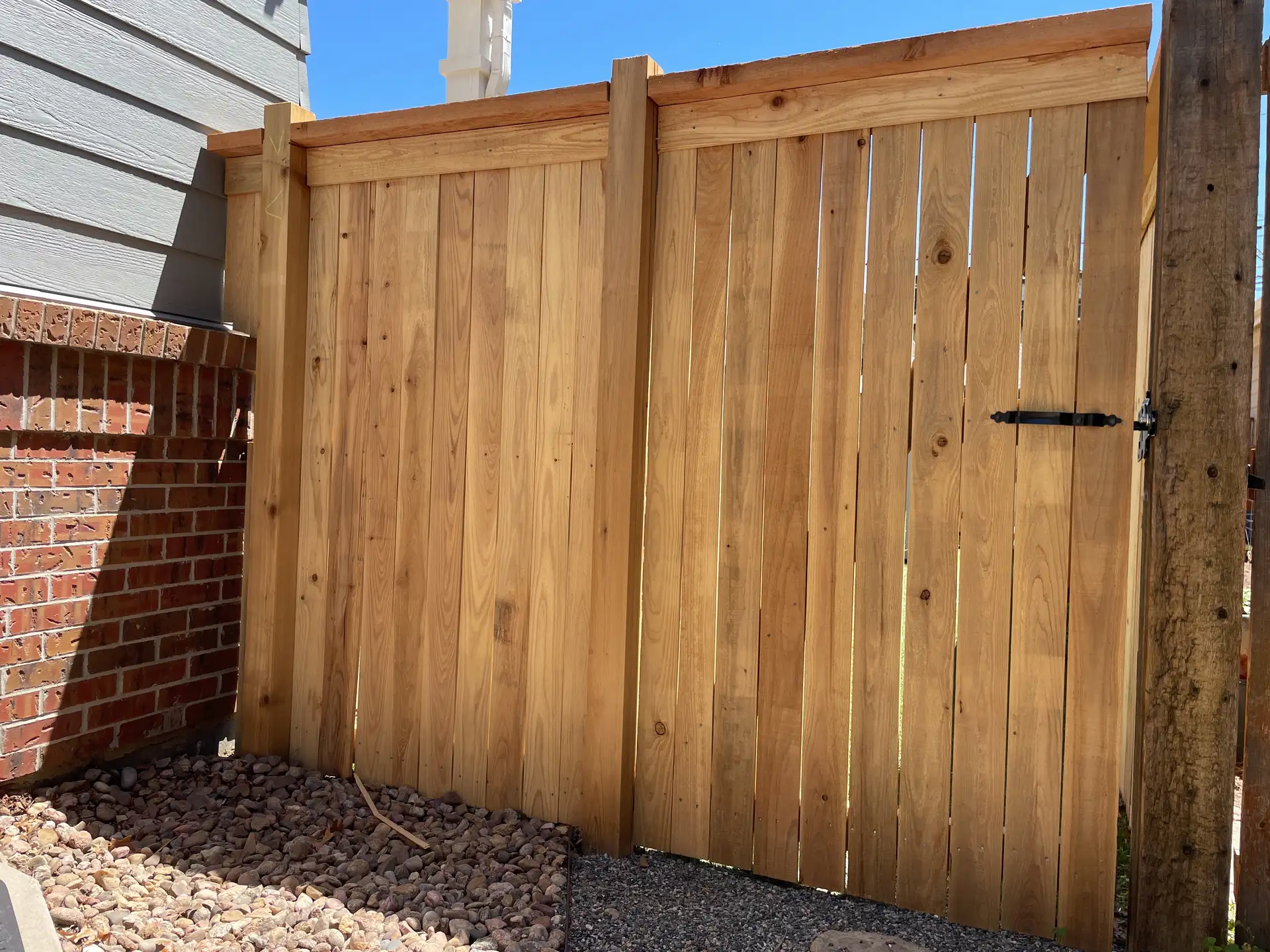
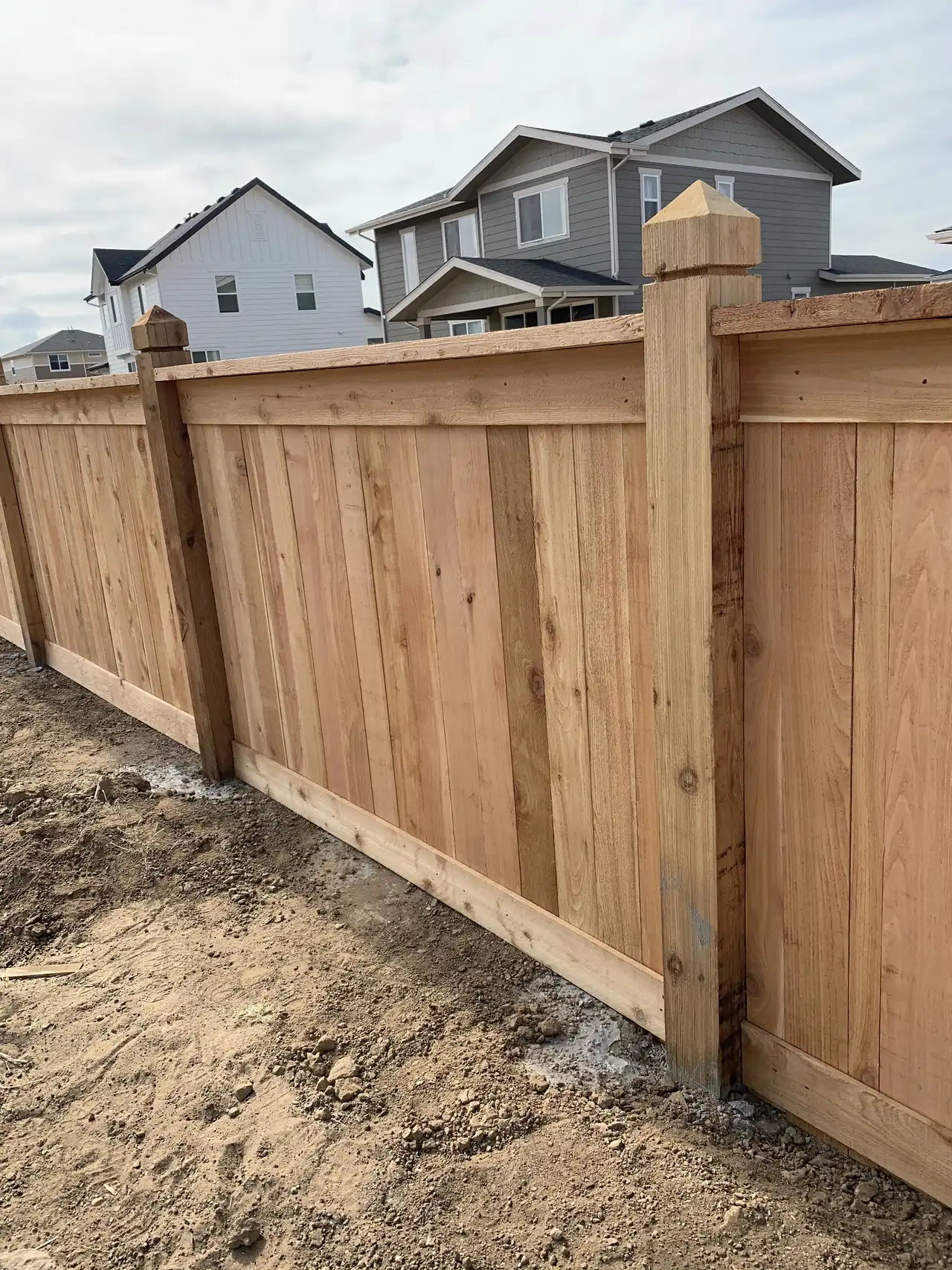
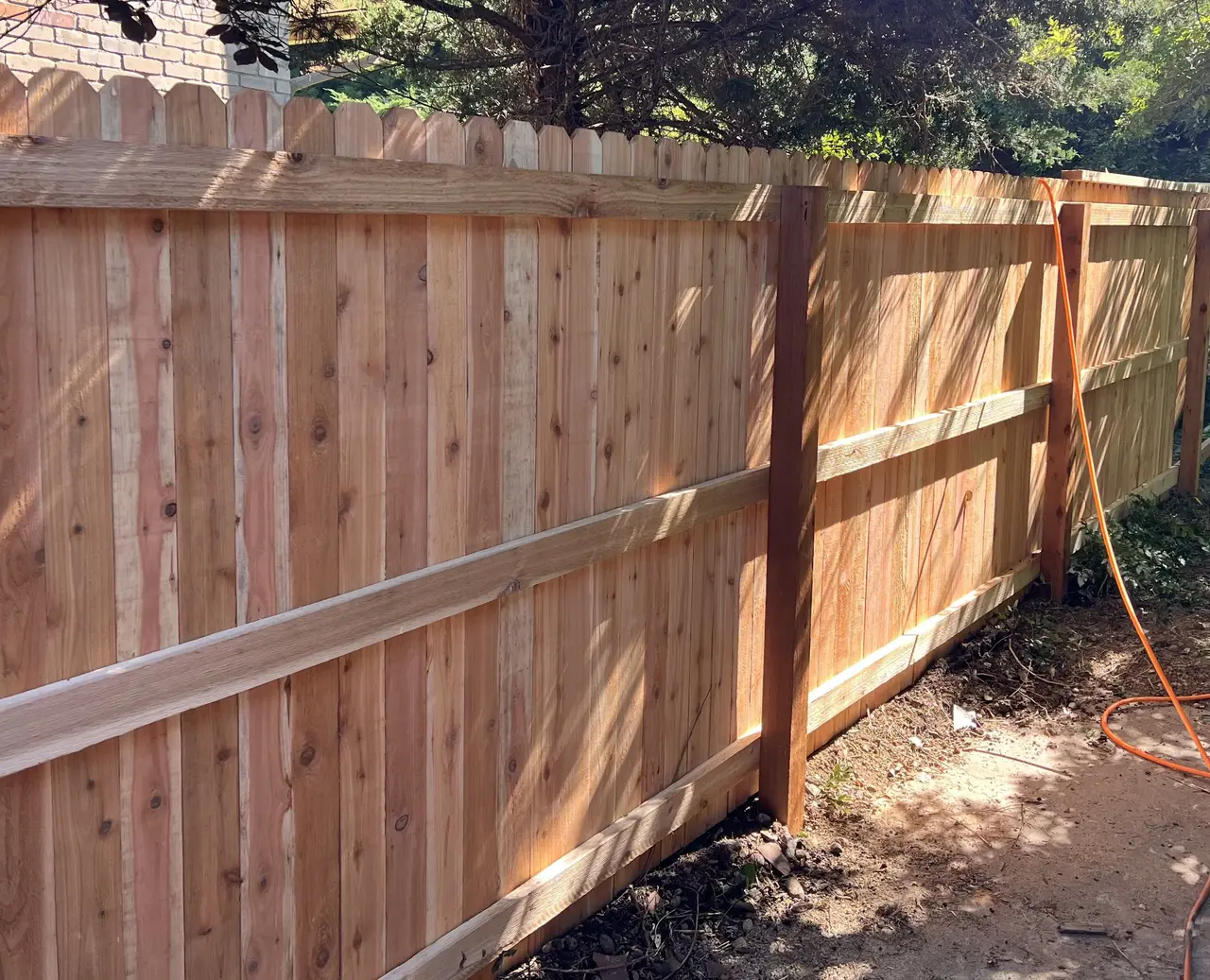
Wood has a place where privacy leads. Apartment communities, restaurant patios, office properties and mixed use spaces use it for privacy, noise reduction and a warmer look.
A well built wood privacy fence blocks views into service areas, dumpsters, outdoor seating and tenant spaces. It softens a property in a way chain link and metal usually do not.
The catch is maintenance. Colorado sun, moisture and seasonal shifts wear finishes and structure, so material quality, post installation and sealing all count. On larger perimeters, wood often makes more sense in targeted areas than around the full site.
Is vinyl fencing a good fit for commercial settings?
Vinyl is usually chosen for privacy, a clean appearance and low maintenance. It works for office properties, residential style developments, community amenities and screened service areas.
The benefit is consistency. It needs no painting or staining and keeps a tidy look with little upkeep.
Vinyl is not the first recommendation for high risk sites where impact resistance and climb resistance are top priorities. It works best where privacy and appearance lead and security needs are moderate.
When do custom commercial fencing options make more sense?
Some properties do not fit one category. A business may need a welcoming front entrance, a screened trash enclosure and a secure storage area behind the building.
Mixing materials can improve performance and control cost. A site might use ornamental metal at the front, chain link on the side and rear perimeters, and wood or vinyl around customer areas. Each section then does the job it needs to do.
Custom design also helps with grade changes, traffic flow, access control and local requirements. The fence has to work with the site.
What matters most beyond the fence material?
Security does not come from the panel alone. Post depth, frame strength, gate hardware, latches and installation quality all affect how the fence performs over time. A good looking fence with weak gate posts becomes a constant repair issue.
Be careful about choosing on price only. Lower bids sometimes leave out the structural details that keep a fence standing straight. For a business, downtime, safety issues and repeat repairs usually cost more than doing it right the first time.
Plan for maintenance too. Chain link and ornamental metal tend to need the least, wood needs periodic care, and vinyl stays clean with little effort.
How do you choose the right fit for your property?
No single answer suits every site. Chain link is often the best value for large perimeters and practical security. Ornamental metal works when appearance and controlled access have to go together, and wood and vinyl suit areas that need privacy.
For businesses in the Denver area, weather and durability belong in the conversation. Often the smartest answer is not more fence. It is a better combination of fence, gate and design.
Regal Fencing installs commercial fencing and gates across the Denver metro. The first step is a free on site estimate, where we look at how the site works day to day.